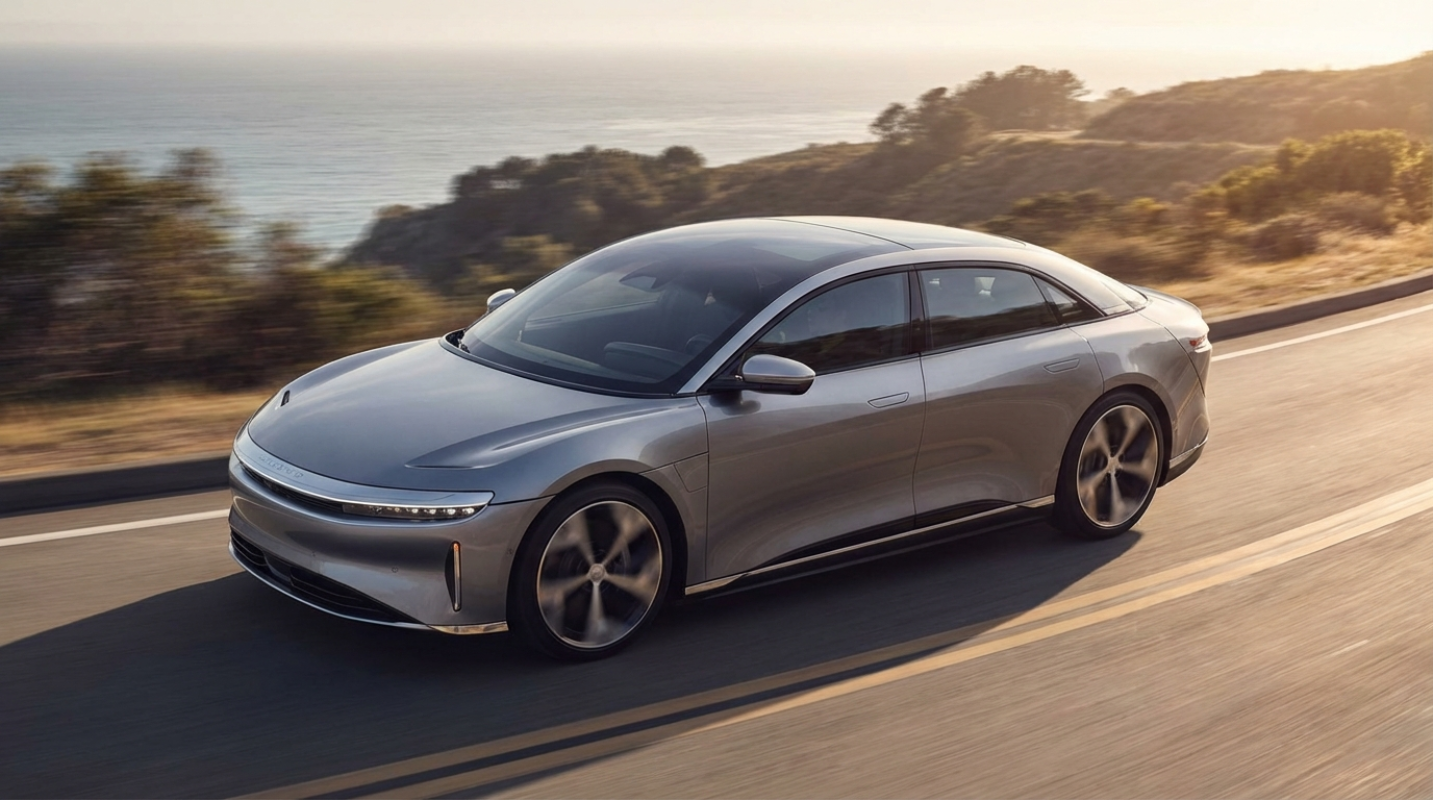
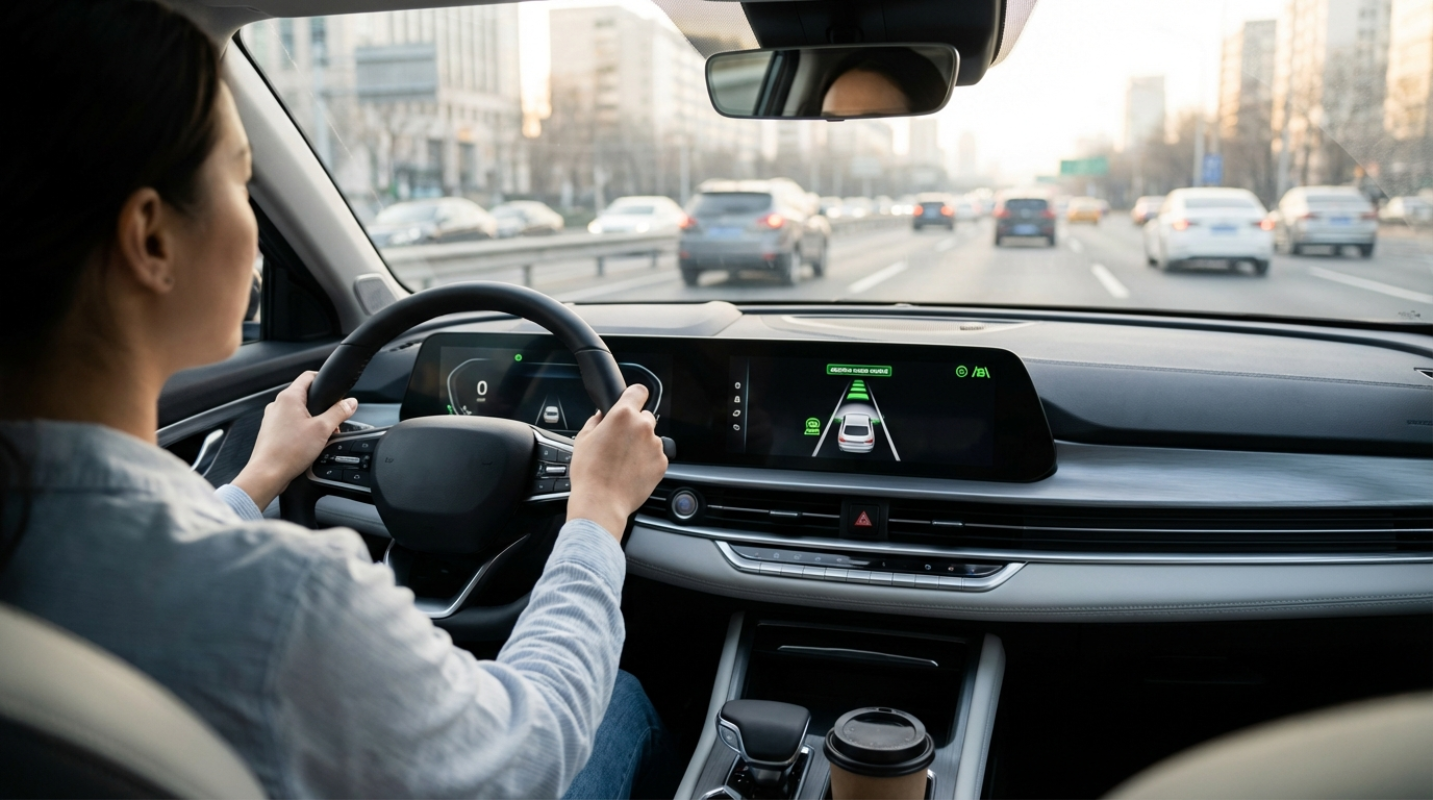
 (Image source: Gemini / Landon Phillips)
 You know that feeling when your leg starts to ache from hovering over the brake pedal for forty minutes? Or that sudden jolt of adrenaline when the car in front of you slams on its brakes because someone missed their exit? Commuting isn't just a way to get to work. It's a mental and physical endurance test. If you're doing this five days a week, you're likely spending hundreds of hours a year in a state of high alert.
This is where Advanced Driver Assistance Systems (ADAS) come into play. We've moved far beyond the basic cruise control that just held a steady speed on an empty highway. Today, these systems act as a digital co-pilot. They're designed to take the edge off the most draining parts of your drive. But not every feature is worth your money. Some are revolutionary, while others are just annoying beeps that you'll end up turning off.
The goal is to identify which features offer the highest return on investment for your daily sanity. It's about finding the tech that reduces your heart rate during a traffic jam and keeps you safe when your focus inevitably wavers.
The Unsung Hero: Adaptive Cruise Control and Traffic Jam Assist
If you could only pick one feature to save your sanity, it should be Adaptive Cruise Control (ACC) with Stop and Go. Think of it as a smarter version of that old cruise control button you probably never use in the city. Instead of just holding a set speed, it uses radar and cameras to maintain a safe distance from the car ahead.
The real magic happens with the "Stop and Go" functionality, often called Traffic Jam Assist. In heavy, congested traffic, the car manages the most tiring part of the drive (the constant transition between the gas and the brake). It can bring your vehicle to a complete halt and then move forward again when the car in front starts rolling. Experts from Consumer Reports and AAA consistently rank this as the top stress-reducer for commuters. It stops that "accordion effect" where you're constantly over-braking and over-accelerating.
So what does this actually mean for your daily life? It means you aren't arriving at the office with a cramped calf muscle and a frazzled brain. By letting the car handle the micro-adjustments in speed, you're preserving your mental energy for the tasks that actually matter. It's the difference between fighting the traffic and simply existing within it.
Needed Safety Nets: Collision Avoidance and Lane Management
Although ACC handles the comfort, other features handle the "what if" scenarios. Automatic Emergency Braking (AEB) is the non-negotiable safety net for urban driving. Recent studies have shown that 2026-era systems are incredibly effective. Research from AAA found that modern vehicles avoided 100% of forward collisions in tests at speeds up to 35 mph.² This is the tech that catches the mistake you didn't see coming because you were checking your blind spot or glancing at a navigation prompt.
Lane management is another area where the tech has matured. You'll see two main types: Lane Keeping Assist (LKA) and Lane Centering Assist (LCA).
- Lane Keeping Assist, This is a reactive system. If you start to drift over the line, it "pings" you back into the lane. It can feel a bit like pinball.
- Lane Centering Assist, This is a proactive system. It provides continuous steering inputs to keep you dead-center in your lane.
For a highway commuter, Lane Centering is the winner. It provides much better stability and reduces the tiny steering corrections you make thousands of times per hour. When you pair this with Blind Spot Monitoring (BSM), you've got a much safer environment for multi-lane merging. Modern BSM systems don't just flash a light in your mirror. They can actually apply counter-steering if you try to move into a lane where a car is hiding.¹
Parking Peace of Mind: Maneuvering in Tight Urban Spaces
The commute doesn't end when you reach the parking garage. In fact, for many, the final five minutes are the most stressful. Urban parking spots are getting smaller while cars seem to be getting larger. This is where low-speed ADAS features pay for themselves.
Rear Cross Traffic Alert (RCTA) is a lifesaver when you're backing out of a spot between two giant SUVs. It uses sensors to look "around the corner" for approaching vehicles or pedestrians that you can't see yet. It's the digital equivalent of having a spotter standing behind your car.
If your budget allows, a 360-degree or perimeter camera system is worth every penny. These systems stitch together views from multiple cameras to give you a top-down "bird's eye" view of your car. It makes parallel parking or navigating tight drive-thru lanes effortless. You'll never curb a wheel again because you can see exactly where the concrete is in relation to your tires. For some, Self-Parking Assist takes it a step further by handling the steering (and sometimes the gears) entirely. It's a convenience that turns a high-pressure maneuver into a hands-off experience.
Beyond the Basics: Features That Improve the Long Haul
If your commute involves long stretches of monotonous highway, you might benefit from features designed to combat fatigue. Driver Drowsiness Detection is becoming more common. It doesn't just look at your eyes. It monitors your steering patterns. If it notices you're making the jerky, sudden corrections typical of a tired driver, it will suggest you take a break. It's a subtle reminder that can prevent a disaster on those Friday afternoons when you're running on fumes.
Intelligent Speed Assistance (ISA) is another helpful tool for avoiding expensive surprises. It uses cameras to read speed limit signs and displays them on your dashboard. Some systems can even automatically adjust your cruise control to match the changing limits. It's a great way to stay compliant and avoid "speed trap" tickets in zones where the limit drops unexpectedly.
Looking ahead, we're seeing more vehicles arrive with hardware ready for Level 3 automation. Although we aren't quite at the point where you can nap behind the wheel, these systems are bridging the gap. They offer higher levels of reliability and smoother interventions than the systems of just a few years ago.
Top Recommendations
When you're looking for a vehicle that excels in the daily grind, certain brands and systems stand out for their reliability and ease of use.
- Ford BlueCruise, This system is highly rated for its driver-monitoring tech. It uses infrared cameras to make sure you're paying attention, which actually allows for hands-free driving on thousands of miles of mapped highways.
- Subaru EyeSight, Known for providing high-end safety features like AEB and Lane Centering at a more affordable price point. It's a great value for commuters who want top-tier safety without a luxury price tag.
- Toyota Safety Sense 3.0, The latest version includes "Proactive Driving Assist," which can gently brake for curves or slower traffic even when you don't have the cruise control turned on.
- Lexus Teammate, One of the few systems that earns high marks for keeping the driver engaged and focused, rather than letting them zone out completely.⁵
Prioritizing Features for Your Daily Drive
So, what should you actually look for when you're at the dealership? If you're trying to stay within a budget, prioritize the "Big Three" for commuting: Adaptive Cruise Control with Stop and Go, Automatic Emergency Braking, and Blind Spot Monitoring. These are the features that provide the most tangible benefits every single day.
When you're test-driving a car, don't just look at the leather seats. Turn on the ADAS features. Does the Lane Centering feel smooth, or does it fight you? Does the Adaptive Cruise Control brake gently, or is it jerky? A system that feels natural is one you'll actually use. A system that feels erratic will just stay turned off, which is a waste of your money.
Remember that these features are partners, not replacements. They're there to catch your mistakes and lighten your load, but you're still the one in charge. Treat them like a really helpful co-pilot who never gets tired or distracted. With the right tech, that hour-long crawl into the city might just become the most relaxing part of your day. Sound impossible? Try a car with a good Traffic Jam Assist, and you might change your mind.
Sources:
1. How Valuable is Blind Spot Monitoring in Your Vehicle
2. Ranking the Top 5 Advanced Driver Assistance Systems for 2025 Models
3. Best ADAS Systems Platforms 2025 Analysis
4. IIHS Releases First Partial Driving Automation Safety Ratings