 (Image source: Porsche)
 If you've been sitting on the sidelines waiting for electric cars to "get good," your wait is finally over. We're currently in the middle of 2026, and the EV market has shifted from expensive tech toys for early adopters to actual, practical tools for everyday life. You've probably noticed it yourself. The conversation isn't just about whether an EV can make it to the grocery store anymore. Now, it's about which one fits your family, your budget, and your specific style.
The next 12 months are going to be a wild ride. We're seeing more diversity in body styles, significantly better range, and pricing that actually competes with gas-powered cars. So what does this actually mean for you? It means you'll have options that don't require a six-figure salary or a degree in electrical engineering to appreciate.
In this guide, we'll walk through the most important releases coming to your local dealerships. We'll look at the crossovers that'll likely dominate suburban driveways, the luxury heavyweights pushing the limits of physics, and the workhorses designed to get the job done.
The Crossover Contenders, Mainstream Models for Real People
Crossovers are the bread and butter of the American car market. If a manufacturer doesn't have a solid electric SUV, they're basically invisible. Fortunately, the next year brings some of the most exciting "normal" cars we've seen in a long time.
One of the biggest stories is the arrival of the 2026 Kia EV3. Think of it like a pint-sized version of the massive EV9 that everyone was talking about last year. It has that same futuristic, blocky look but in a package that's much easier to park. Kia is targeting a starting price around $35,000, which is a huge deal for a car that offers up to 300 miles of range.² Although it uses a 400V system instead of the ultra-fast 800V tech found in its bigger siblings, it'll still charge from 10% to 80% in about 30 minutes.⁴ That's the digital equivalent of a quick coffee break on a road trip.
Then there's the return of a legend. The 2027 Chevrolet Bolt is coming back, and it's better than ever. Chevy realized they had a hit on their hands and decided to bring it onto their new Ultium platform. The big news here? A confirmed starting price of $28,995.⁷ It also fixes the biggest complaint about the old model by bumping fast charging up to 150 kW. If you're looking for a budget-friendly way to go electric without feeling like you're driving a golf cart, this is the one to watch.
Performance and Luxury, High-End EVs Pushing the Envelope
If budget isn't your primary concern and you want to see what's actually possible with modern technology, the luxury segment is where the magic happens. We're seeing battery architectures that make old EVs look like dial-up internet.
The 2025 Hyundai Ioniq 9 is the one your neighbors will probably be talking about. It's a massive three-row SUV that looks more like a high-end lounge than a car. Because it's built on an 800V system, you can add 100 miles of range in about the time it takes to check your emails. It's incredibly aerodynamic for its size, which helps it hit an estimated 335 miles of range.⁸ It's library-quiet inside, making it a perfect candidate for long family road trips where you actually want to hear what your passengers are saying.
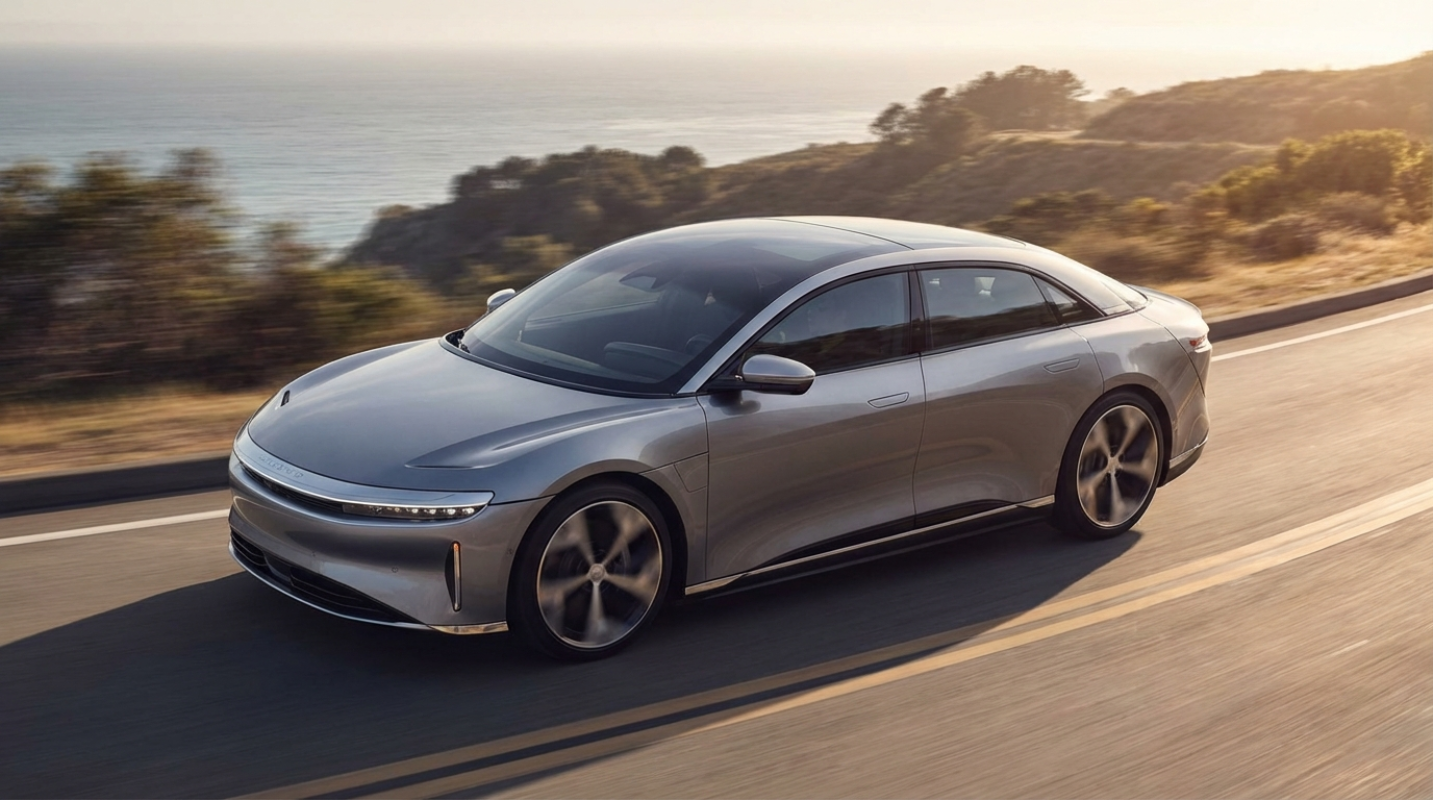
For those who want the absolute pinnacle of range, the Lucid Gravity is the new benchmark. It's aiming for over 450 miles on a single charge.¹ That's enough to get you from Los Angeles to San Francisco with plenty of juice to spare. It has a 900V architecture, which is the fastest charging tech on the planet. It's expensive, starting around $79,900, but it shows where the rest of the industry will be in five years.
We also have to talk about the 2025 Dodge Charger Daytona. This is a important moment for American muscle. Dodge is trying to prove that you can have a "muscle car soul" without a V8 engine. They've even added a synthetic exhaust system that vibrates the car to give you that visceral feeling. It's heavy, weighing in at nearly 5,800 pounds, but with 670 horsepower, it'll still pin you to your seat.
The Juniper Factor, Tesla Refines a Best-Seller
You can't talk about EVs without mentioning Tesla. The world is currently waiting for the "Juniper" refresh of the Model Y, which is expected to hit the streets in early 2025. Sound familiar? It's following the same path as the Model 3 "Highland" update we saw recently.
The focus here isn't on more power, but on making the car a better place to spend time. You can expect a much quieter cabin thanks to better acoustic glass and more premium materials inside. They're also adding ventilated seats and a screen for the passengers in the back. These might seem like small changes, but when you're the best-selling car in the world, you don't need to reinvent the wheel. You just need to make it spin more smoothly.
Trucks and Utility, Electrifying the Workhorse
The pickup truck market is the final frontier for electrification. Although the early leaders like the F-150 Lightning and Rivian R1T are great, the next 12 months will see more competition that focuses on real-world utility.
We're starting to see more focus on how these trucks perform under load. It's one thing to have a 0-60 time of three seconds, but what happens when you're towing a 7,000-pound trailer? Manufacturers are finally addressing this with larger battery packs and better thermal management. We're also seeing a surge in electric commercial vans. Although they might not be flashy, they're going to change the way deliveries work in your city, making streets quieter and cleaner.
What to Expect, Pricing and Infrastructure
Buying an EV in 2026 is a lot different than it was a few years ago. The biggest change you'll notice is the charging port. Almost everyone has switched to the NACS (Tesla-style) plug. This means you won't have to worry as much about finding a compatible charger. You'll be able to pull up to a Tesla Supercharger in your Ford, GM, or Rivian and just plug in.
Pricing is also becoming more transparent. With the federal tax credits now available at the point of sale in many cases, that $35,000 sticker price can feel more like $27,500 the moment you sign the paperwork. But you'll want to do your homework on which models qualify, as the rules about battery sourcing are always shifting.
Should you pre-order now or wait for reviews? If you're looking at a high-demand model like the Ioniq 9 or the Lucid Gravity, getting on a list early is usually a smart move. But for the mainstream crossovers, waiting a few months after launch can often save you from "early adopter" headaches and might even land you a better deal once the initial hype dies down.
The Next Era of Driving
The next 12 months aren't just about new cars. They're about the moment electric vehicles stop being an "alternative" and just become the default choice for most people. The variety of models coming out proves that there's no longer a one-size-fits-all approach to EVs. Whether you want a budget-friendly commuter, a luxury land-yacht, or a silent muscle car, you're going to find it.
The best thing you can do is go out and get behind the wheel. The tech is moving fast, and the cars coming out in 2026 are light-years ahead of what was available just three years ago. It's a great time to be a driver, especially if you're ready to leave the gas station behind for good.
Sources: