 (Image source: Gemini / Landon Phillips)
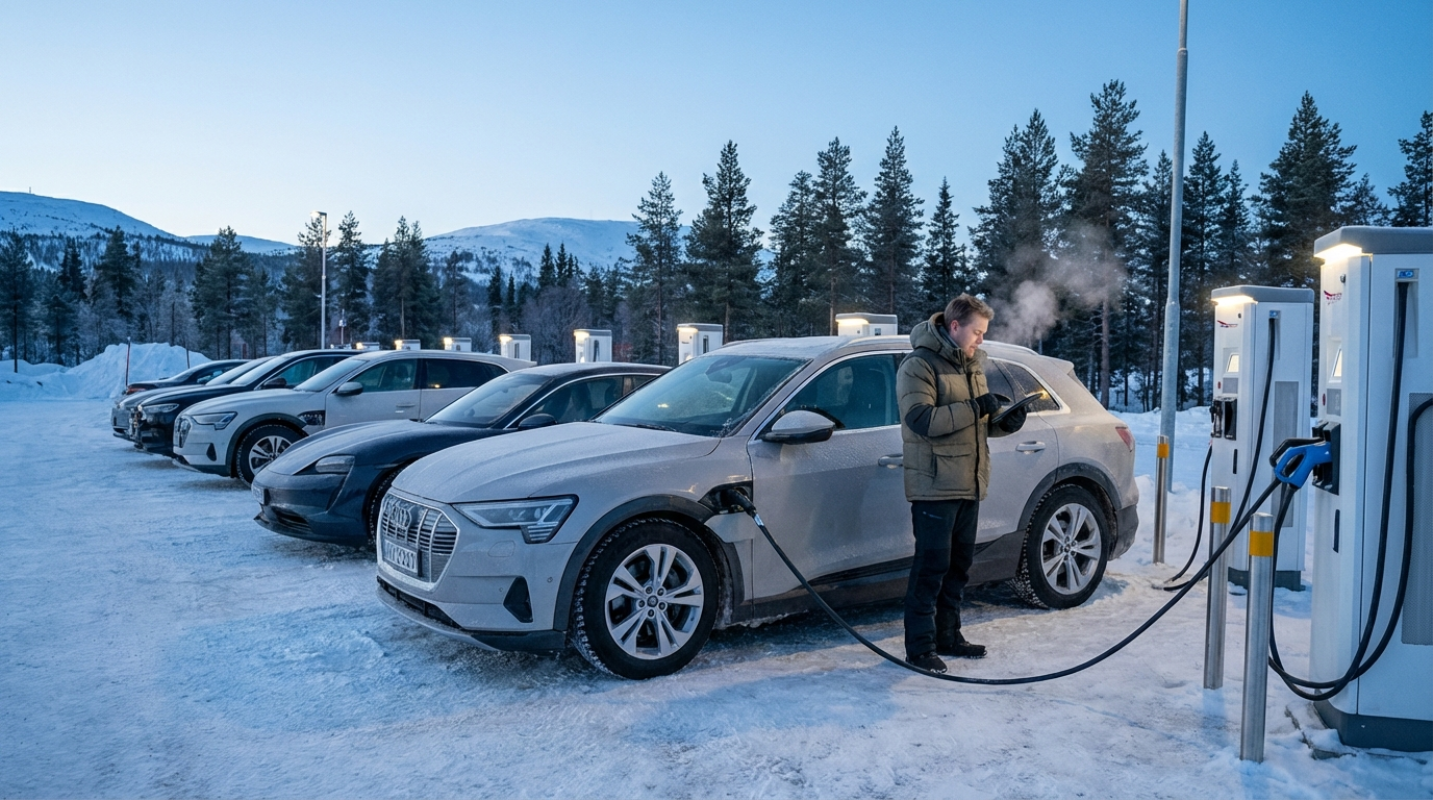
 You've probably heard the horror stories or maybe you've lived through one. You hop into your electric vehicle on a Tuesday morning in January, the temperature is hovering around 20 degrees, and your dashboard proudly displays 250 miles of range. By the time you've driven ten miles to the office, that number has plummeted to 210. It feels like your car is gaslighting you.
This isn't just a minor annoyance. It's the digital equivalent of your phone battery jumping from 20 percent to dead while you're trying to call an Uber. In the world of EVs, we call the dashboard range display the Guess-O-Meter for a reason. It's often doing exactly that: guessing.
As we move through 2026, the gap between what a car promises and what it actually delivers in the freezing cold is finally starting to close. Some manufacturers have mastered the art of winter honesty, while others are still painting a rosy picture that dissolves the moment the frost hits the windshield. So, which cars can you actually trust when the mercury drops?
Why Cold Weather Devastates EV Range (And Why Accuracy Matters)
To understand why your range disappears, you have to realize that batteries are a lot like humans. They don't like being cold. Inside a lithium-ion battery, lithium ions move through a liquid electrolyte. When that liquid gets cold, it becomes more viscous. Everything slows down. The chemical reactions that provide power just can't happen as quickly or efficiently.
But that’s only half the battle. The bigger drain is actually you. In a gas car, about 70 percent of the energy in the fuel is wasted as heat. In the winter, the car just pipes that "waste" into the cabin to keep you warm. It's free.
Electric cars are too efficient for their own good. They don't generate much waste heat, so they have to use battery power to keep you from shivering. If your car uses an old-school resistive heater, it's basically a giant toaster element under the dash. It eats range for breakfast. This is why accuracy matters more than the total number. If you know you only have 150 miles, you can plan. If you think you have 250 but only have 150, you're going to be calling a tow truck.
The Science of Cold Weather Range Loss - Battery Chemistry vs. Cabin Climate Control
If you want an EV that stays accurate in the winter, you need to look for one specific piece of hardware: a heat pump. Think of a heat pump like a refrigerator running in reverse. Instead of moving heat out of a box to keep it cold, it grabs tiny amounts of heat from the outside air (even when it feels cold to you) and moves it into the cabin.
Recent data from 2025 and early 2026 shows that vehicles equipped with advanced heat pumps retain significantly more range. Tesla’s Octovalve system was the early leader here, but others have caught up and even surpassed it. The best systems today don't just pull heat from the air. They scavenge "waste" heat from the motors, the battery, and even the onboard computers to keep you warm.
Then there's the software side of the house. A car can have a great battery, but if the computer doesn't account for the fact that it's 10 degrees outside, the range estimate will be garbage. The best predictive algorithms now look at live weather data, your personal driving history, and even the elevation of the route you've plugged into the GPS.
The Leaders - Automakers with Superior Cold Weather Range Prediction
If we're looking at who's winning the honesty game right now, the Polestar 3 is currently sitting at the top of the mountain. In the most recent Norwegian winter testing, which is basically the Olympics for EVs, the Polestar 3 showed a deviation of only 5.1 percent from its official rating.¹ That is almost unheard of. Most cars are happy to stay within 20 percent.
How did they do it? It’s a combination of a massive 111 kWh battery and a thermal management system that is incredibly conservative. Polestar’s software doesn't try to impress you with a big number when you start the car. It gives you the "real" number immediately.
Hyundai and Kia are also heavy hitters here. Their E-GMP platform, which powers cars like the Ioniq 5 and EV6, is widely considered one of the smartest in the industry. These cars are known for being exceptionally good at "scavenging" heat from every possible source. Although their initial range estimates can be a bit variable depending on the trim, they tend to be very stable once you start driving. They don't give you those "heart-attack drops" where 30 miles vanish in three minutes.
BMW and Audi deserve a shout-out for their "Guess-O-Meter" philosophy. If you drive an Audi Q8 e-tron or a BMW iX, you might notice the range estimate looks lower than a comparable Tesla at first. That’s because German engineers are notoriously pessimistic. They would rather you arrive with 20 miles to spare than run out of juice two miles from the charger. It's an "under-promise and over-deliver" approach that works wonders for driver anxiety.
The Underperformers - Where Range Estimates Fall Short in Winter
It isn't always about the battery size. Sometimes, it's about the car's ego. Some manufacturers still program their dashboards to show the EPA-rated range when the car is at 100 percent charge, regardless of the temperature. This is the ultimate recipe for range anxiety.
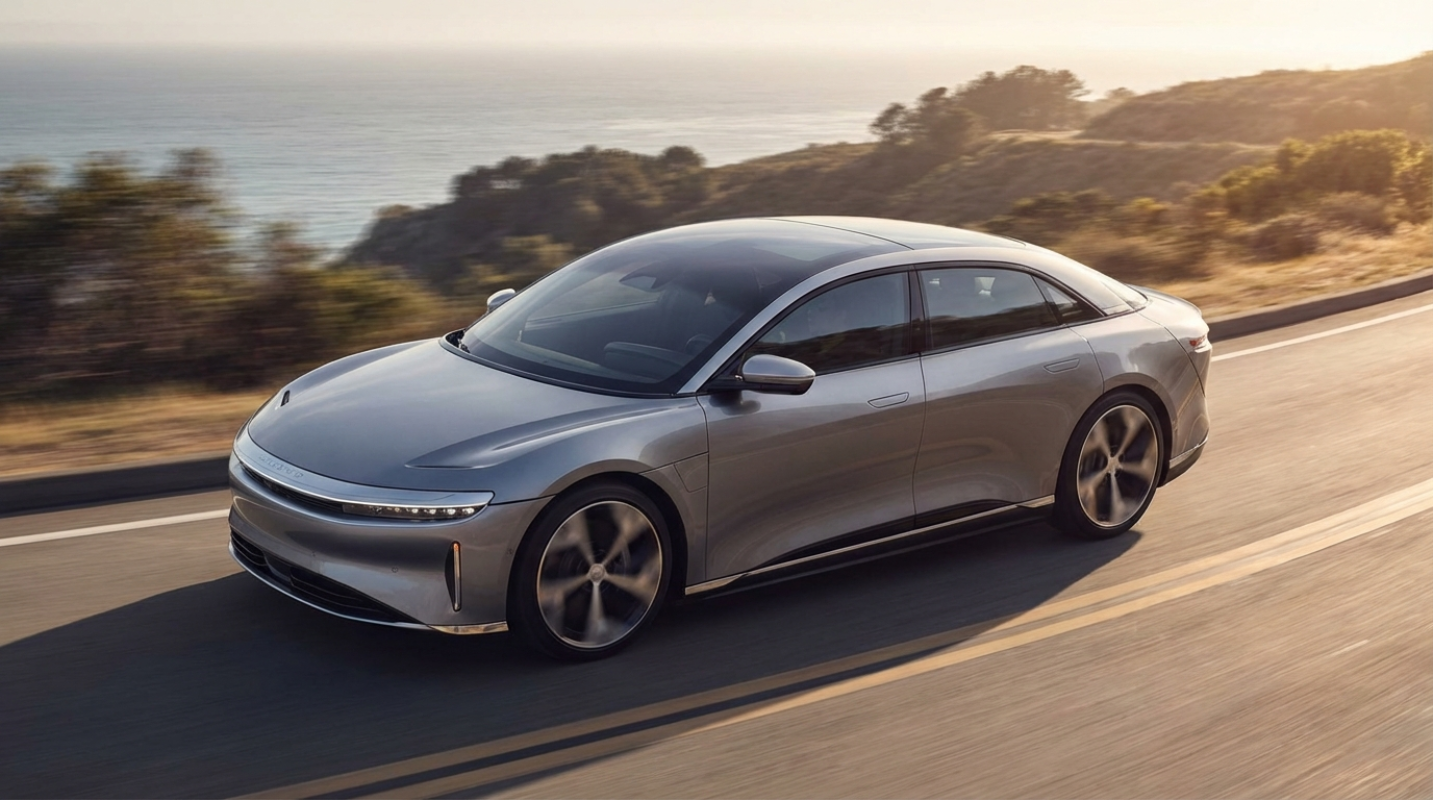
Take the Lucid Air, like. It's a marvel of engineering and currently holds the record for the longest absolute distance traveled in cold weather tests. But it often shows a massive "percentage" drop from its official rating in extreme cold. Because it’s so aerodynamic and efficient in the summer, the relative "penalty" of running a heater and fighting through dense, cold air hits its numbers harder than it hits a boxy SUV.
We also see some struggles with the new GM Ultium models, like the Equinox EV and Blazer EV. Recent studies found that these vehicles often prioritize cabin comfort over raw range. They use resistive heaters alongside their heat pumps to get the cabin hot fast. This is great for your toes, but it can lead to a 24 percent to 28 percent drop in range that the dashboard doesn't always predict accurately at the start of your trip.
Top Recommendations for Cold Climates
If you live somewhere where the snow stays on the ground for four months a year, you need a car that treats range as a promise, not a suggestion. Based on the most recent 2025 and 2026 performance data, these are the models that won't leave you guessing.
- Polestar 3 - The current gold standard for winter accuracy. It lost only 5.1 percent of its range in freezing Norwegian tests, making it the most "honest" EV on the market today.¹
- Hyundai Ioniq 5 and 6 - These use an incredibly efficient heat pump system that scavenges heat from the motors and electronics. They consistently stay within 15 percent of their predicted range even in sub-freezing temps.
- Tesla Model X and Model 3 (Highland) - Tesla's 2025.8 software update finally moved their range estimates away from fixed EPA numbers toward a dynamic system that actually looks at how you're driving.
- BMW i5 and iX - These models are known for being conservative. If the car says you have 180 miles, you can almost guarantee you'll get every one of them.
- Chevrolet Silverado EV - A surprise contender in recent testing, showing only a 14 percent deviation in cold weather. Its massive battery pack provides enough "thermal mass" to resist rapid temperature swings.
Practical Steps to Optimize Your Winter Range
Even if you don't have the "perfect" winter EV, you can make your Guess-O-Meter much more accurate by changing how you interact with the car. The most important thing you can do is "precondition."
Most modern EVs have a scheduled departure feature. Use it. This tells the car to use power from the wall (while it's still plugged in) to warm up the battery and the cabin. If the battery is already at its happy temperature when you unplug, the car doesn't have to waste its own energy getting there. It's like stretching before a workout.
Also, trust the navigation. In cars like the Ford Mustang Mach-E or F-150 Lightning, Google Maps integration now allows the car to share real-time battery data with the navigation system. This predicts your state of charge at your destination with roughly 90 percent accuracy because it knows about the hills and the traffic ahead.²
At the end of the day, winter range loss is a physics problem that we're slowly solving with better chemistry and smarter code. We aren't quite at the point where cold doesn't matter, but we are at the point where you don't have to be afraid of it. Pick a car with a good heat pump, use the preconditioning features, and maybe keep a pair of gloves in the glovebox just in case.
Sources:
1. Norwegian Automobile Federation (NAF) El Prix Winter 2025
2. TechInsights CES 2024 Breakthroughs in EV Range Estimation