 (Image source: Gemini / Landon Phillips)
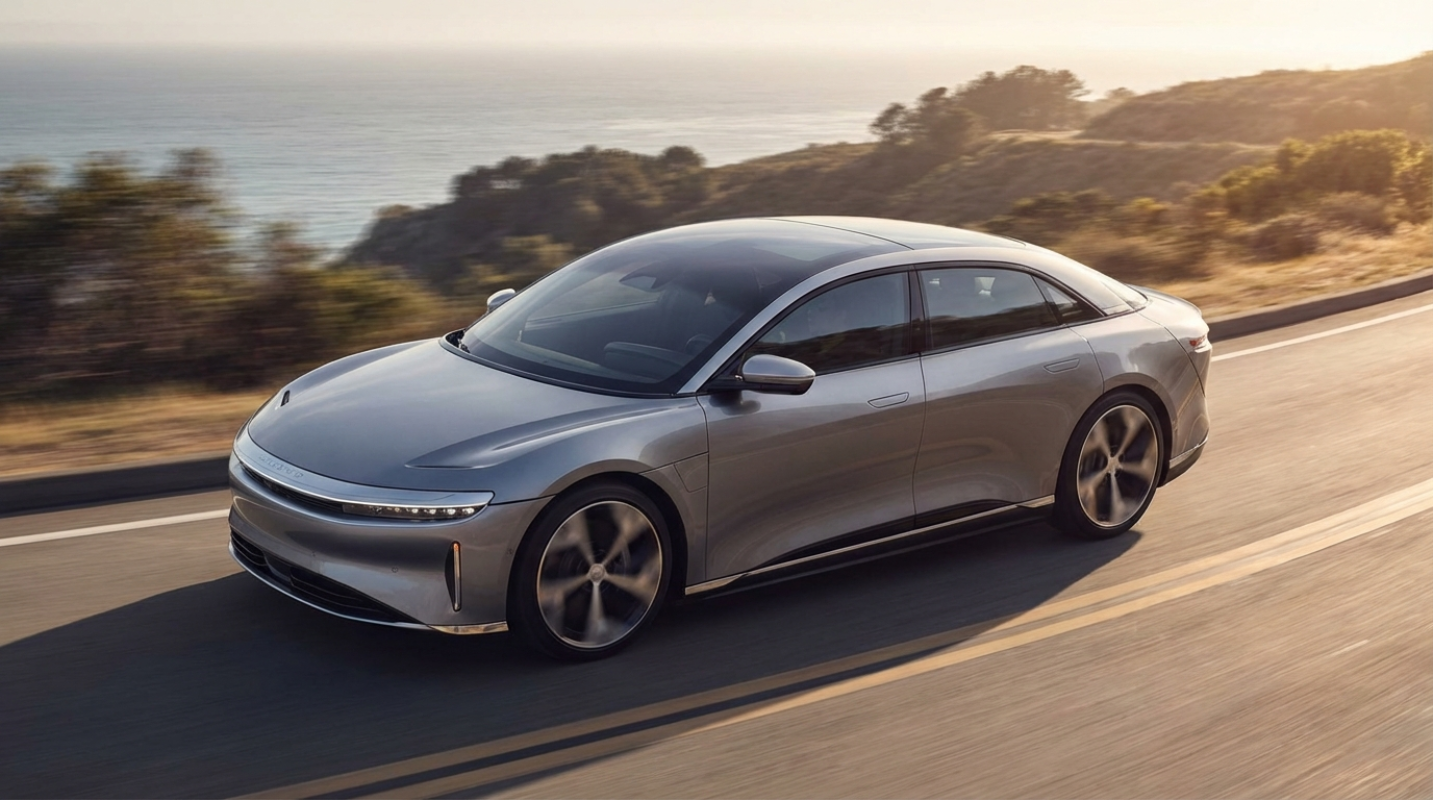
 You've probably seen the Lucid Air gliding silently down the road, looking like something straight out of a sci-fi flick. But while the sleek exterior gets all the attention, the real magic is happening under the skin. Lucid calls its driver-assistance platform DreamDrive. It's their software-first answer to the question of how an EV should handle the chaos of the road.
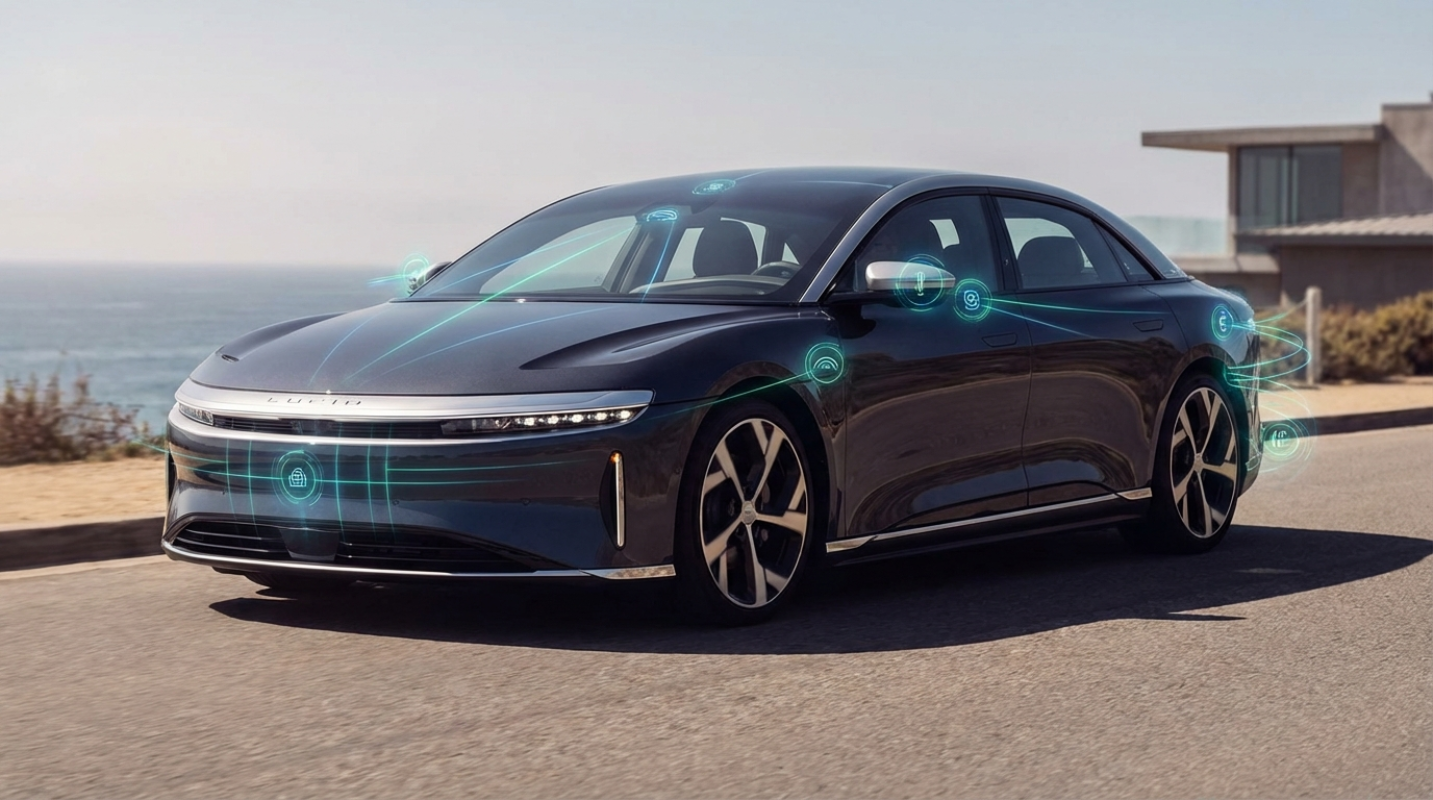
Think of DreamDrive as the car's nervous system. It's not just a collection of gadgets glued onto a bumper. It's a high-speed network designed to see, think, and react faster than you ever could. This article breaks down the physical hardware that makes your commute a whole lot easier. We're going to look at the cameras, the radar, and that famous LiDAR unit to see how they all work together to keep you safe.
The Triad of Sensing with Cameras Radar and LiDAR
When you're driving, you rely on your eyes. The Lucid Air relies on 32 different sensors to do the same thing, but with a much wider field of view.¹ The DreamDrive Pro suite is the heavy hitter here, and it's built around three main types of tech.
First, you have the cameras. There are 14 visible-light cameras scattered around the car, plus another four surround-view cameras. That's 18 total. These aren't just for parking. They're constantly scanning for lane lines, traffic signs, and other cars. Because there are so many, the car has a 360-degree view of everything happening around it. If a car enters your blind spot, the cameras have already seen it and logged its speed.
Then there's the radar. Lucid uses five radar units. One is a long-range unit at the front, and the other four are short-range sensors. Radar is great because it doesn't care about rain or fog. It bounces radio waves off objects to figure out exactly how far away they are and how fast they're moving. Although cameras can sometimes get confused by shadows or bright sunlight, radar stays steady.
The real star of the show, though, is the LiDAR. Lucid was the first company to put a solid-state, high-resolution LiDAR unit in a production car in North America.² Think of LiDAR as a laser-based radar. It fires out pulses of light to create a high-definition 3D map of the world. It's the "secret sauce" that helps the car distinguish between a flat piece of cardboard on the road and a solid concrete barrier.
Beyond the Basics with Ultrasonics and Mapping
Although the big sensors handle the high-speed stuff, the Lucid Air has a whole other layer of tech for the "tight" moments. You know those stressful times when you're trying to squeeze into a tiny parallel parking spot? That's where the 12 ultrasonic sensors come in.
These sensors form a 360-degree perimeter around the car. They're perfect for close-range detection. They can feel out a curb or a shopping cart that might be too low for the cameras to see clearly. It's the digital equivalent of holding your hands out in a dark room to make sure you don't bump into the wall.
But sensing what's physically there is only half the battle. The Air also uses high-definition (HD) mapping and GPS. This isn't just the map you see on your dashboard. These are incredibly detailed maps that tell the car exactly where the HOV lanes are, where exit ramps start, and how a complex merge is supposed to work.⁴
So what does this actually mean for you? It means the car isn't just reacting to what's in front of it. It knows what's coming around the next bend before you do. To keep all this hardware working right, Lucid even included sensor cleaning systems. Because let's be honest, a mud-covered sensor is just a blind sensor.
Sensor Fusion and How DreamDrive Processes the World
Having 32 sensors is great, but it's useless if they don't talk to each other. This is where a concept called sensor fusion comes in. Instead of the cameras and radar working in isolation, the car merges all that data into one single model of the environment.
Imagine you're at a loud party. You're using your eyes to read lips and your ears to hear words. Your brain "fuses" that info so you can understand the conversation. DreamDrive does the same thing. If the camera thinks it sees a bridge shadow but the radar says there's a solid object there, the car's "brain" weighs that data and decides to slow down.
To handle all this data, Lucid uses the NVIDIA DRIVE platform.³ It's a massive computing unit that processes gigabits of data every second. To make sure that data moves fast enough, Lucid built a proprietary Ethernet Ring. It connects four computer gateways, one at each corner of the car.
This setup is all about redundancy. If one gateway fails, the others can still talk to each other. The car won't just lose its "sight" or its ability to steer. It's a safety-first approach that sets Lucid apart from competitors who might rely on a single central processor or just cameras alone. Sound familiar? Although some companies have ditched radar and LiDAR for "vision-only" systems, Lucid is doubling down on the idea that more data is always better.
Functionality Show and What DreamDrive Can Do Today
So, you've got all this hardware. What does it actually do for you on a Tuesday morning commute? With the recent updates, like UX 2.4, the system has become much more capable.⁵
The biggest thing you'll notice is the 3D Lane Visualization. On your center display, you'll see a real-time map of every car, truck, and lane marker around you. It's incredibly precise because it uses that LiDAR data we talked about earlier. It gives you a sense of confidence because you can see exactly what the car is seeing.
Then there's the Highway Assist. It's a Level 2+ system, which means it handles the steering, braking, and acceleration on the highway while you stay attentive. It now includes
- Driver-Initiated Lane Change Assist. You just hold the turn signal stalk, and the car checks its sensors. If it's clear, it smoothly moves you over.
- Extended Stop-and-Go. In heavy traffic, the car can come to a full stop and then start moving again on its own, provided you're still looking at the road.
- Superior Lane Centering. Owners often mention that the Lucid feels more "human" in how it stays in the lane compared to other EVs.⁶ It doesn't ping-pong between the lines. It just stays locked in.
The best part is that this hardware is future-proof. Because the car is "software-defined," Lucid can send out over-the-air (OTA) updates to make the sensors smarter. The hardware is already there to support higher levels of autonomy, like Level 3, where you might not even have to keep your eyes on the road in certain conditions.
Lucid isn't trying to be the most aggressive or "edgy" system on the market. They're aiming for the smoothest and most predictable. By using a massive suite of 32 sensors, they've built a car that doesn't just see the world, it understands it. Whether you're navigating a tight parking garage or cruising down the 405, that hardware is working overtime to make sure you get there in one piece.⁷
Sources:
1. A deeper look at DreamDrive and DreamDrive Pro
2. Lucid Air In-Depth: DreamDrive
3. Lucid confirms NVIDIA architecture for its DreamDrive Pro