 (Image source: Gemini / Landon Phillips)
 You’ve seen the ads. You’ve heard the hype. But as we move through 2026, the "self-driving" car isn't just a Silicon Valley fever dream anymore. It is sitting in your neighbor’s driveway, likely in the form of a sleek, heavy, and very smart electric SUV. The convergence of electric vehicle (EV) adoption and advanced driver assistance systems (ADAS) has finally hit a tipping point. We are no longer just talking about cars that stay in their lanes. We are talking about machines that can actually take over the mental load of driving.
So what does this actually mean for you? For years, we’ve been stuck in Level 2 autonomy. Think of this as a glorified cruise control where you still have to keep your hands on the wheel and your eyes on the road. It is helpful, sure, but it is not exactly revolutionary. Next-generation autonomy, specifically Level 3 and Level 4, is the real leap. This is the "eyes-off" moment where the car handles the steering, braking, and monitoring of the environment, allowing you to actually relax.
This article highlights the key upcoming electric SUVs that are leading this charge. We are looking at a handful of pioneers that have moved past the testing phase and are putting high-level autonomy into the hands of real drivers. From German luxury icons to Chinese tech giants, the race is on to see who can make the commute a thing of the past.
Defining Next-Gen Autonomy - What Level 3 and Beyond Means for SUVs
To understand why these new SUVs are such a big deal, you have to understand the SAE Levels of driving automation. Most cars on the road today, including older Teslas and Fords, are Level 2. They can help you steer and brake, but the human is always the "driver of record." If something goes wrong, it is on you. Level 3 is a different beast entirely. In a Level 3 system, the car is the driver under specific conditions, like on a highway or in heavy traffic. You can look away. You can check your phone. You can even watch a movie.
The hardware making this possible is a mix of "super-human" sensors. Although your eyes can get tired or blinded by glare, these SUVs use high-resolution LiDAR, which is basically a laser-based radar that creates a 3D map of everything around the car. They also pack massive processing power from companies like Nvidia and Qualcomm. These chips are the digital equivalent of a fighter jet’s brain, processing billions of operations per second to make sure the car never misses a beat.¹
Of course, it is not just about the tech. There are massive regulatory hurdles. Governments are still figuring out who is at fault if an autonomous car crashes. In many cases, manufacturers like Mercedes are actually stepping up and accepting legal liability when their Level 3 systems are active. That is a huge vote of confidence that should help build the trust factor for skeptical buyers.
Spotlight on the Pioneers - Key Upcoming Electric SUVs
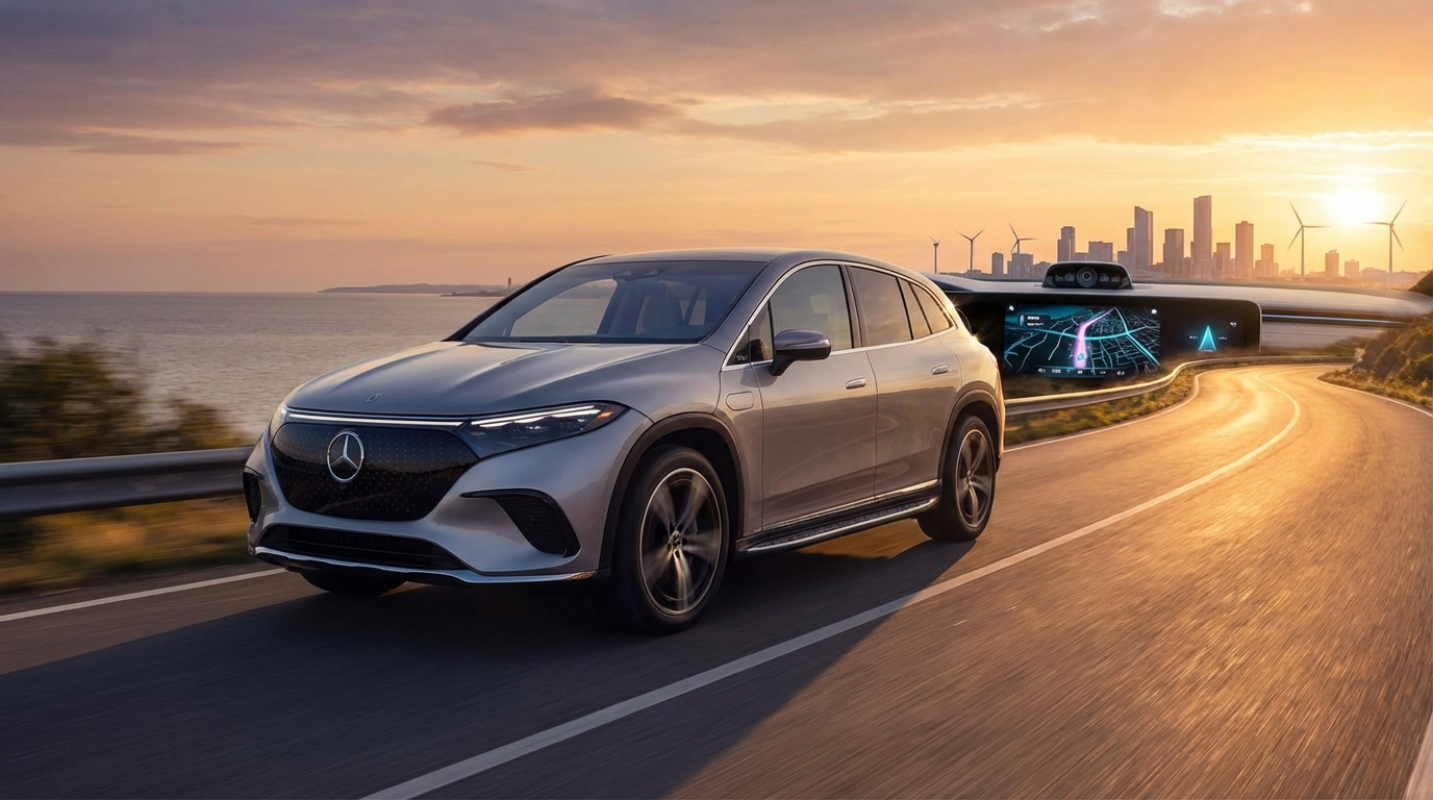
Mercedes-Benz is currently the one to beat in this space. Their EQS SUV is already roaming the streets of California and Nevada with DRIVE PILOT. In early 2025, they pushed a massive update that increased the maximum autonomous speed from 37 mph to a much more useful 59 mph. It uses the Valeo SCALA 3 LiDAR sensor, which is part of a redundant system. If one sensor fails, there is another one ready to take over. It is expensive, but it is the gold standard for safety right now.⁴
BMW is not far behind. Their iX3 Neue Klasse SUV, which is hitting production lines as we speak in 2025 and 2026, features the Personal Pilot L3 system. Unlike some brands that try to do everything with cameras, BMW is sticking with LiDAR from Innoviz. Their philosophy is all about "sensor fusion." They want the car to see the world in as many ways as possible - cameras, radar, and lasers - so there is never a "blind spot" in the AI's logic.
Then you have the "LiDAR Loyalists" from China. Nio is a name you’ll be hearing a lot more of. Their ES8 SUV features a "Watchtower" layout. If you look at the roof, there is a small bump that houses a long-range LiDAR sensor, giving the car a bird’s-eye view of the road. Nio is betting big that more sensors equal more safety, even if it makes the car a bit more expensive to build.
Interestingly, we are also seeing a "LiDAR Pivot" from some brands. Volvo and Polestar originally promised LiDAR on every EX90 SUV. But due to supply chain issues and a desire to lower costs, they recently announced a shift toward "pure vision" systems for some future models. They are following the Tesla path, trying to use advanced AI and cameras to do the work that lasers used to do. It is a risky move, and it will be fascinating to see if their software can keep up with the hardware-heavy approach of Mercedes and BMW.
The User Experience - How Autonomy Will Change SUV Ownership
How does this actually feel when you’re behind the wheel? Imagine you are stuck in a soul-crushing traffic jam on a Friday afternoon. Usually, this is the most stressful part of your week. With a Level 3 SUV, you hit a button, the steering wheel glows a certain color, and you are done. You can turn your seat slightly, talk to your passengers, or catch up on emails. The car handles the stop-and-go grind. This is not just a "feature" - it is a way to get your time back.
Parking is another area where these SUVs are becoming truly hands-off. We’ve had "parking assist" for years, but the newest systems don't even require you to be in the car. You can hop out at the curb, and the SUV will find its own spot in the garage. It sounds like magic, but it is really just the result of superior sensor fusion and high-speed processing.
The secret sauce to all of this is Over-The-Air (OTA) updates. Your SUV won't be "stuck" with the tech it had when you bought it. Just like your smartphone, these cars get smarter while you sleep. A software patch might improve how the car handles heavy rain or increase the speed at which it can drive itself. This means the value of the car actually stays higher for longer because the tech is constantly changing.²
The Road Ahead for Autonomous Electric Vehicles
These upcoming SUVs are not just electric. They are fundamentally changing how we think about mobility. We are moving toward a world where the car is a "third space" - somewhere between your home and your office where you can actually be productive or relax. Although we are currently mastering Level 3 highway driving, the next 3 to 5 years will likely bring Level 4 urban autonomy. Imagine a car that can handle a complex city center while you take a nap in the back.
The impact on safety cannot be overstated. Human error causes the vast majority of accidents. By taking the human out of the loop in high-risk situations like highway merging or traffic jams, these SUVs are setting a new benchmark for road safety. They don't get distracted, they don't get tired, and they don't get road rage.³
As charging networks grow and battery tech improves, the "electric" part of the equation is becoming a given. The real battleground is now the software. The winners won't just be the ones with the longest range, but the ones with the smartest brains. If you are in the market for a new SUV, you aren't just buying a vehicle anymore. You are buying a robot that happens to have four wheels and a very comfortable interior.
Sources:
1. Future of Autonomous Vehicles
3. Kia to Bring L3 Autonomous Driving to New EV9
4. Leading Companies Reinforce Their Presence in the Luxury Car Market