 (Image source: Gemini / Landon Phillips)
 Think of your EV battery like a high-end athlete. It has incredible potential, but it needs the right environment and recovery to stay at its peak. If you’ve recently made the switch to electric, you’ve probably felt that nagging anxiety about how long your car’s heart will actually last. Will it be a paperweight in five years? Short answer, no. But keeping it in top shape requires a bit more than just plugging it in whenever you get home.
The financial stakes here are higher than they were with internal combustion engines. A battery replacement can cost as much as a small sedan, and your car’s resale value is now tied directly to its battery health. As we move through 2026, the used EV market has become much more savvy. Buyers aren't just looking at the odometer anymore. They want to see the receipts for how you treated those lithium-ion cells.
So what does this actually mean for you? You need to understand the difference between State of Charge (SOC) and State of Health (SOH). SOC is your daily fuel gauge, telling you how much energy you have for your current trip. SOH is the big picture. It represents the total capacity your battery can hold compared to when it was brand new. It’s the digital equivalent of checking your car’s long-term cholesterol levels.
The Big Three Metrics Your Car Reports
Most modern EVs are surprisingly chatty if you know where to look. The first and most important metric is that State of Health (SOH) percentage. Recent data from early 2025 shows that the average annual degradation rate has ticked up to about 2.3 percent.¹ Although that sounds small, it’s a jump from previous years because we’re all using ultra-fast chargers more often. If your car shows an SOH of 95 percent after two years, you’re right on track.
Then there’s the discrepancy between range accuracy and actual range. You might see 300 miles on the dashboard, but you only get 240 on the highway. This is often called the Guess-O-Meter. It’s not necessarily a sign of a bad battery. It’s usually just the car’s computer adjusting for your heavy foot or the freezing weather. Real degradation is a permanent loss of capacity, not just a bad day in the snow.
We also have to talk about your Fast Charging Frequency (DCFC). Although those 350kW chargers are convenient, they’re the equivalent of a high-intensity sprint for your battery. Vehicles that rely primarily on DC fast charging can degrade up to twice as fast as those charged on a Level 2 home setup.¹ It’s all about heat. Your Battery Thermal Management System (BTMS) works overtime to keep things cool, but some heat damage is cumulative.
Practical Health Checks You Can Do at Home
You don't always need a mechanic to get a sense of how your battery is doing. One of the most effective DIY methods is the Full Cycle Test. Over the course of a few weeks, try to monitor how the range drops during a consistent commute. If you notice that your state of charge swings wildly (jumping from 40 percent to 20 percent in just a few miles) that’s a red flag. It often suggests a cell imbalance where one part of the battery is weaker than the rest.
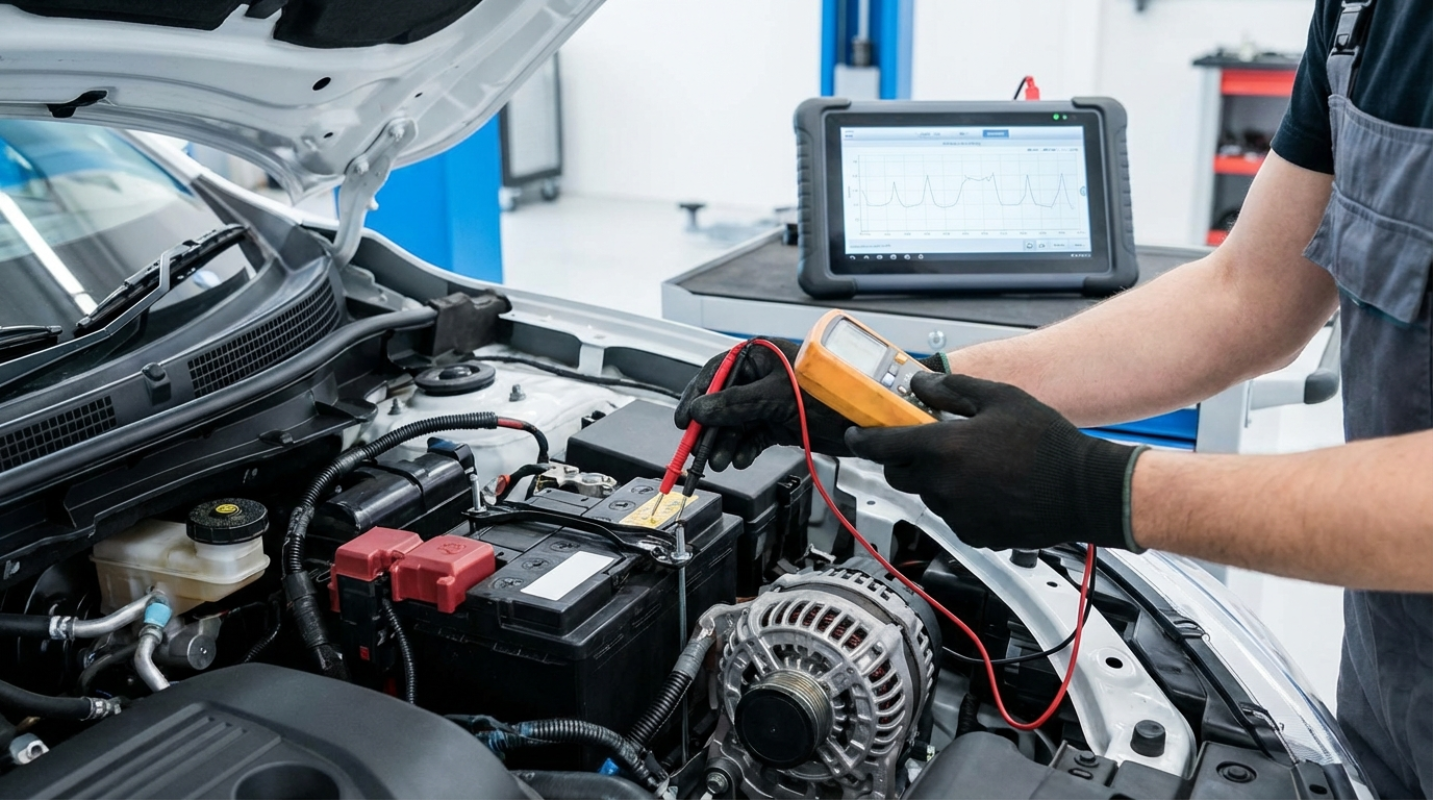
If you want to get a bit more technical, you can use an OBD-II reader. This is a small device that plugs into a port usually found under your dashboard. When paired with an app like Car Scanner or LeafSpy, it gives you a look under the hood that manufacturers sometimes hide. You can see individual cell voltages and the exact internal temperature of the pack.⁴ It’s a bit like having a stethoscope for your car.
Software updates are your best friend here. Manufacturers frequently push out "over-the-air" updates that recalibrate how the car reports its health. Sometimes, a sudden drop in your reported range isn't a physical problem at all. It might just be the computer getting a better, more accurate grip on the battery’s actual state. Always keep your car’s software current to make sure you’re getting the most accurate data.
Lifestyle Habits That Slow Down Degradation
The way you live with your EV determines how long it stays healthy. The 20-80 percent rule is the gold standard for a reason. Lithium-ion batteries hate being stuffed full or left empty. Keeping your daily charge between these two points minimizes chemical stress on the cells. Think of it like a rubber band. If you keep it stretched to its absolute limit all the time, it’ll eventually lose its snap.
Temperature management is the other big factor. If you live in a place where the summers are brutal, parking in the shade or a garage makes a massive difference. Heat plus a high state of charge is the silent killer of EV longevity. If you have to leave your car parked for a week while you’re on vacation, try to leave it at about 50 percent charge. This is the most stable state for the battery chemistry.
You should also use your car’s preconditioning feature whenever possible. By setting a departure time while the car is still plugged in, you’re using grid power to bring the battery to its best operating temperature. This means the battery doesn't have to strain itself to warm up or cool down while you’re driving. It’s a small habit that pays huge dividends over five or ten years.
Top Recommendations for Battery Monitoring
If you want to stay ahead of the curve, there are a few tools that make monitoring much easier. These range from simple apps to hardware you can keep in your glovebox.
- Recurrent - A software-only service that connects to your car’s API. It provides monthly health reports and compares your battery to thousands of other similar models.
- Veepeak OBDCheck BLE+ - A budget-friendly OBD-II dongle that works with almost every EV diagnostic app on the market.⁴
- ClearWatt - This is excellent if you’re planning to sell your car. They provide a certified health certificate that proves to a buyer your battery is in good shape.³
- OBDLink MX+ - The professional-grade choice. It’s faster and more reliable than cheaper alternatives, which matters if you’re doing deep dives into Tesla diagnostics.
When to Call in the Professionals
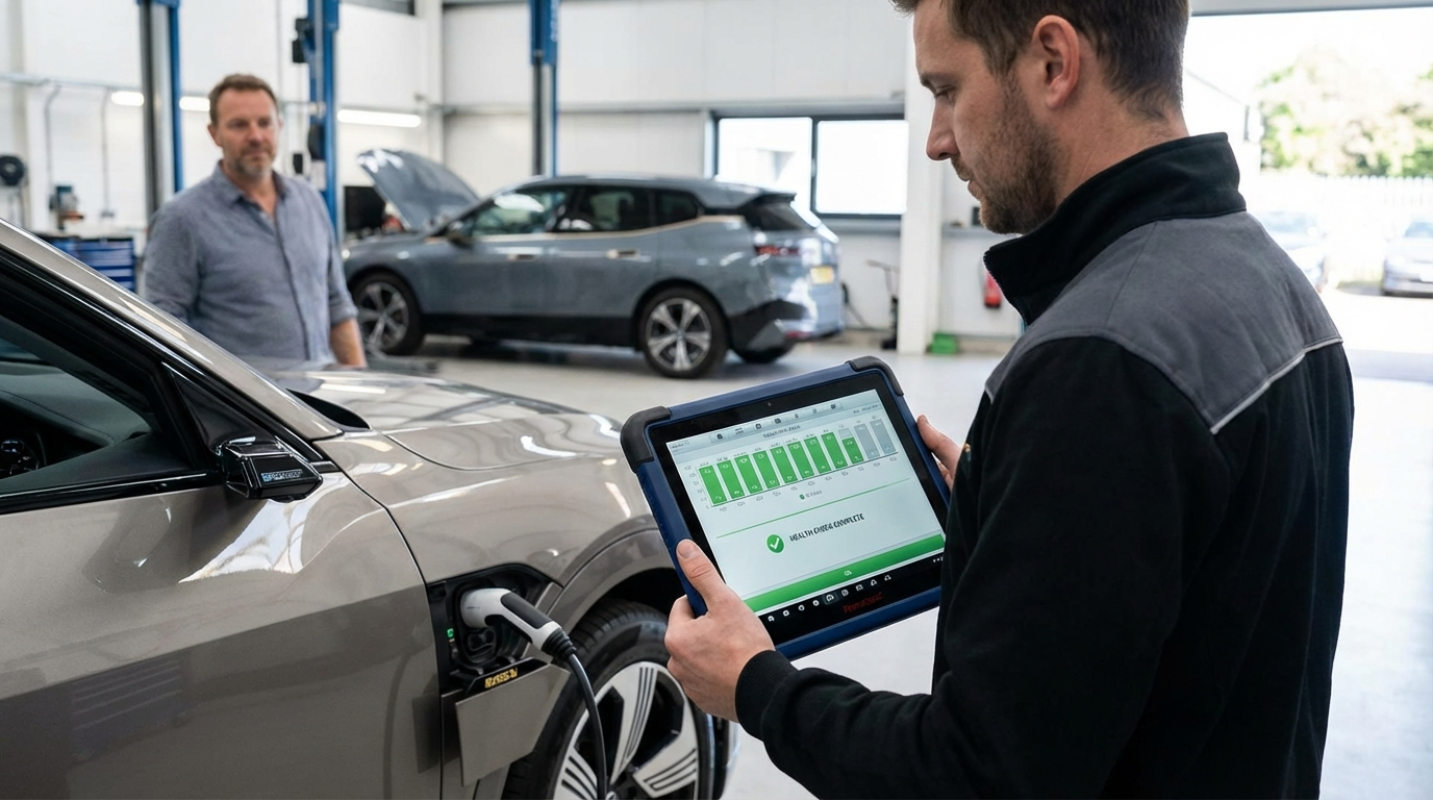
At some point, you might need a dealer to step in. Most EVs come with a strong warranty, typically 8 years or 100,000 miles. These warranties usually kick in if the SOH drops below 70 percent. If you’ve done your home checks and the numbers aren't adding up, it’s time for a professional diagnostic.
Dealer tools can see things your phone app can't. They can perform a "cell balancing" procedure that forces the battery to level out the voltage across every single cell. This can sometimes "recover" lost range that seemed like permanent degradation. They can also check for physical issues like coolant leaks within the battery pack that could lead to catastrophic failure if left alone.
Proactive monitoring isn't about being paranoid. It’s about being an informed owner. When you understand the health of your battery, you drive with more confidence and eventually sell with a better price tag. The data shows that these batteries are outlasting the cars they’re built into, but only if they’re treated with a little bit of respect. Keep an eye on the metrics, stick to the 80 percent rule, and your EV will likely be on the road for decades.
Sources:
1. Geotab EV Battery Health Analysis
2. MME-AE Best Battery Testers
3. ClearWatt Approach to Battery Health
4. Reddit EV Community OBD2 Scanner Recommendations
5. Recurrent Auto Battery Longevity Data
This article on aidriv.com is for informational and educational purposes only. Readers are encouraged to consult qualified professionals and verify details with official sources before making decisions. This content does not constitute professional advice.