 (Image source: Gemini / Landon Phillips)
 Imagine trying to run a marathon while breathing through a handful of cotton balls. You'd probably finish the race, but you wouldn't set a personal record, and you'd feel absolutely miserable by the end. Your car's engine is a massive air pump that needs to breathe just as much as you do. For every gallon of gasoline your car burns, it gulps down about 10,000 gallons of air.
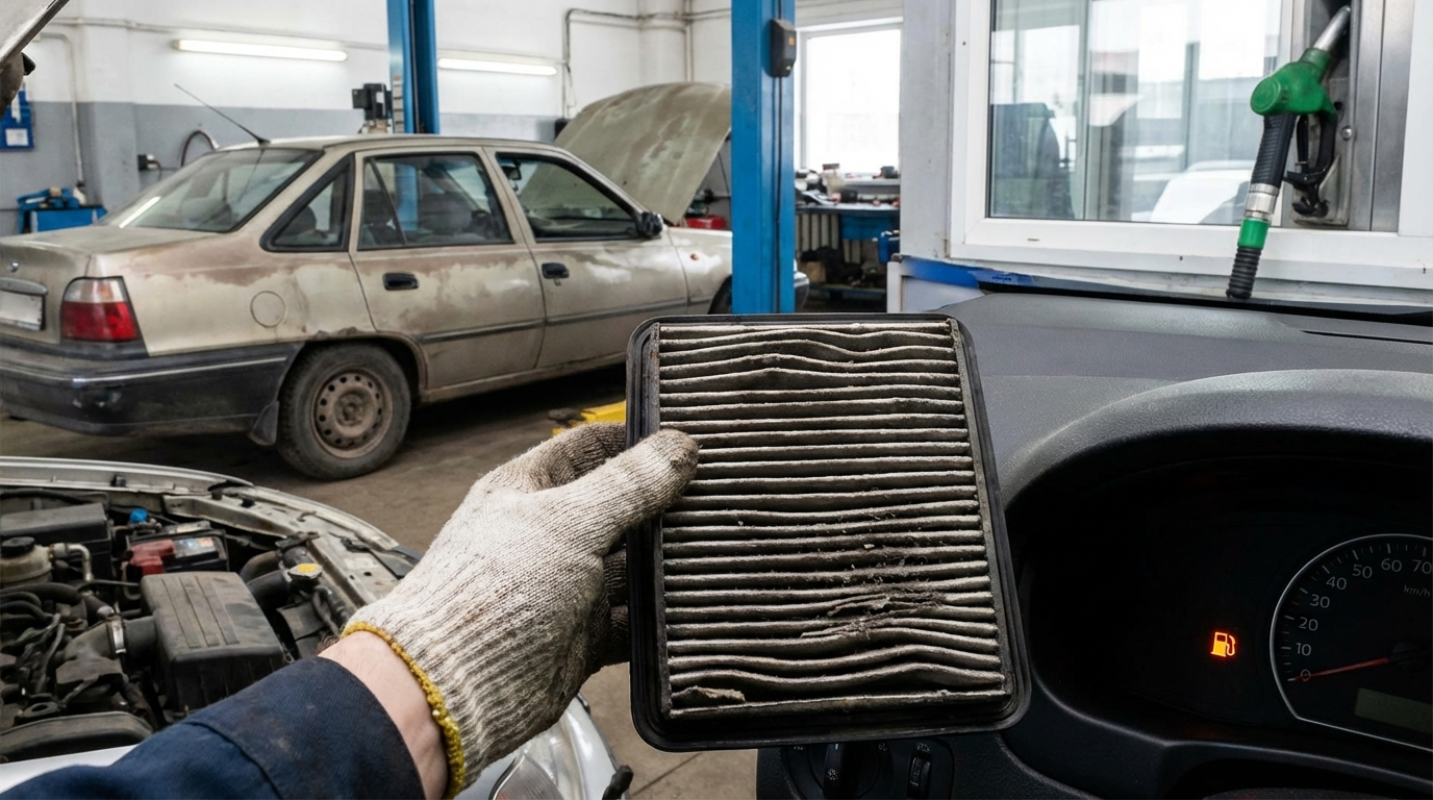
The air filter is the only thing standing between your precision-engineered internal components and the gritty reality of the road. It's the engine's lungs. When those lungs get clogged with dust, pollen, and road debris, the entire system starts to struggle. You might not notice it immediately, but even minor clogging can degrade your performance, fuel economy, and the long-term health of your vehicle.
The Mechanics of Restriction, How Clogging Starves Your Engine
To understand why a dirty filter is such a problem, you have to look at the stoichiometric ratio. That's a fancy term for the perfect balance of air and fuel. In a perfect world, your engine wants about 14.7 parts of air for every 1 part of fuel. If that balance is off, things get messy quickly.
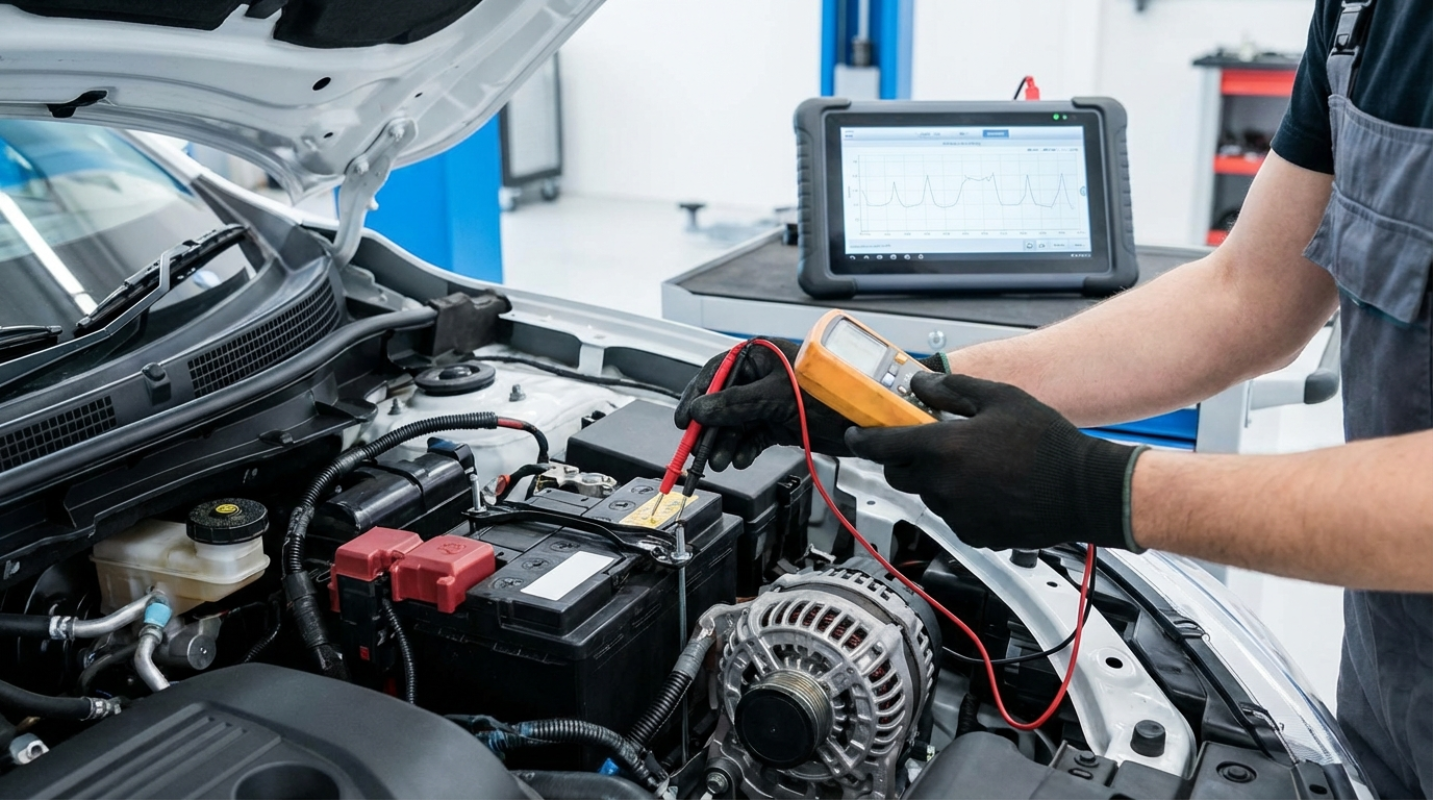
Modern cars rely on the Mass Air Flow (MAF) sensor to tell the computer exactly how much air is coming in. This sensor is incredibly sensitive. Research from 2025 shows that when mineral dust coats the hot-wire element of a MAF sensor, it can cause a 17.9% reduction in output voltage.² If you're using one of those "high-performance" oiled filters and the oil migrates to the sensor, that voltage drop can skyrocket to nearly 47%.
So what does this actually mean for your daily commute? It creates a "double whammy" effect. At idle, a dirty sensor might over-report airflow, making the engine run "rich" with too much fuel. Under a heavy load, it might under-report airflow, causing a "lean" condition. You'll feel this as engine hesitation, a rough idle, or a frustratingly sluggish response when you try to merge onto the highway.
Performance Fallout, Fuel Economy, Horsepower, and Emissions
There's a long-standing debate about whether a dirty air filter actually kills your gas mileage. If you're driving a classic car from the 1970s with a carburetor, a clogged filter is a disaster for your wallet. Those old systems can't "lean out" the mixture, leading to a fuel economy loss of up to 14% if the filter is severely blocked.
But what about your modern 2026 daily driver? The answer is a bit more nuanced. In most fuel-injected engines, the Engine Control Unit (ECU) is smart enough to realize there's less air coming in. It simply reduces the amount of fuel it injects to maintain that perfect ratio. You won't see a massive drop in MPG, but you'll pay for it in raw power.
Technical data from manufacturers like Hyundai and Ford indicates that modern engines, especially those with Gasoline Direct Injection (GDI) and turbochargers, are incredibly sensitive to airflow. A restricted filter can lead to a 6% to 11% loss in acceleration.¹ You'll feel like you're constantly driving uphill or towing a small trailer that isn't there. Plus, if the engine is running rich because of sensor errors, you're looking at increased emissions and potential failure of your next state inspection.
Beyond Performance, Long-Term Damage and Maintenance Costs
The real danger of a dirty air filter isn't just a slower 0-60 time. It's the "silent" destruction of your engine's internals. When a filter gets too clogged, the vacuum pressure from the engine can actually pull contaminants through the filter media or cause the seals around the filter box to fail.
Once dust gets past the filter, it enters the "danger zone." SAE International papers highlight that particles between 2 and 22 microns are the most destructive.² These tiny grains are small enough to slip into the microscopic clearances between your piston rings and cylinder walls. Once they're in there, they act like liquid sandpaper, grinding away at the metal every time the piston moves.
It's a simple math problem. You can spend $20 on a high-quality paper filter today, or you can spend $5,000 on an engine rebuild in three years. About 80% of engine failures related to wear are caused by abrasive dust that was ingested through the intake system. For GDI engines, clean air is even more key because particulates can sandblast the high-pressure fuel injector nozzles, shortening their lifespan by up to 30%.
Top Recommendations
Practical Guide, Inspection and Replacement Best Practices
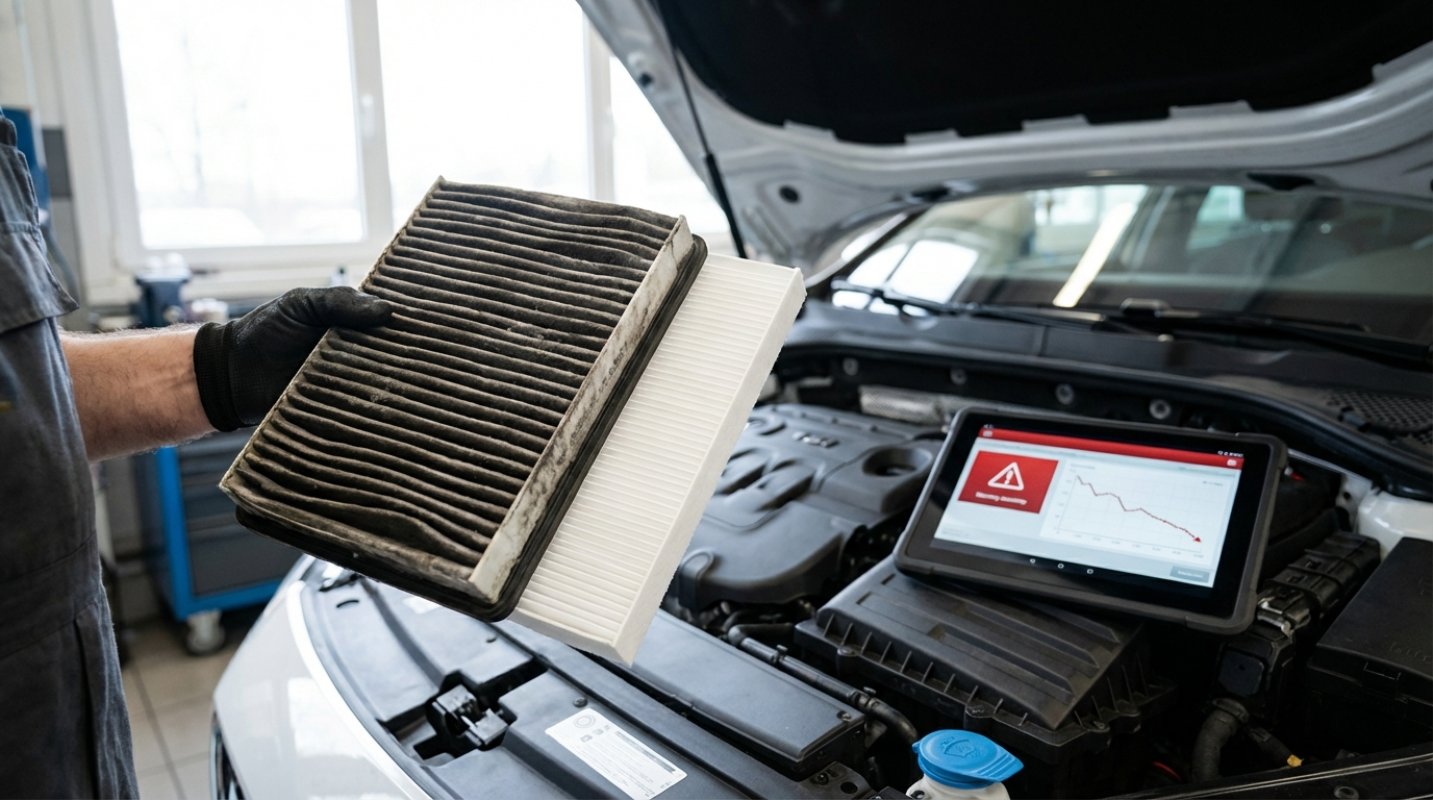
How do you know when it's time to swap? Most people rely on the "light test," where you hold the filter up to a bright bulb to see if light passes through the pleats. Although that's a decent starting point, it's not foolproof. Modern pleated filters can trap a massive amount of dust deep within their fibers while still looking relatively clean on the surface.
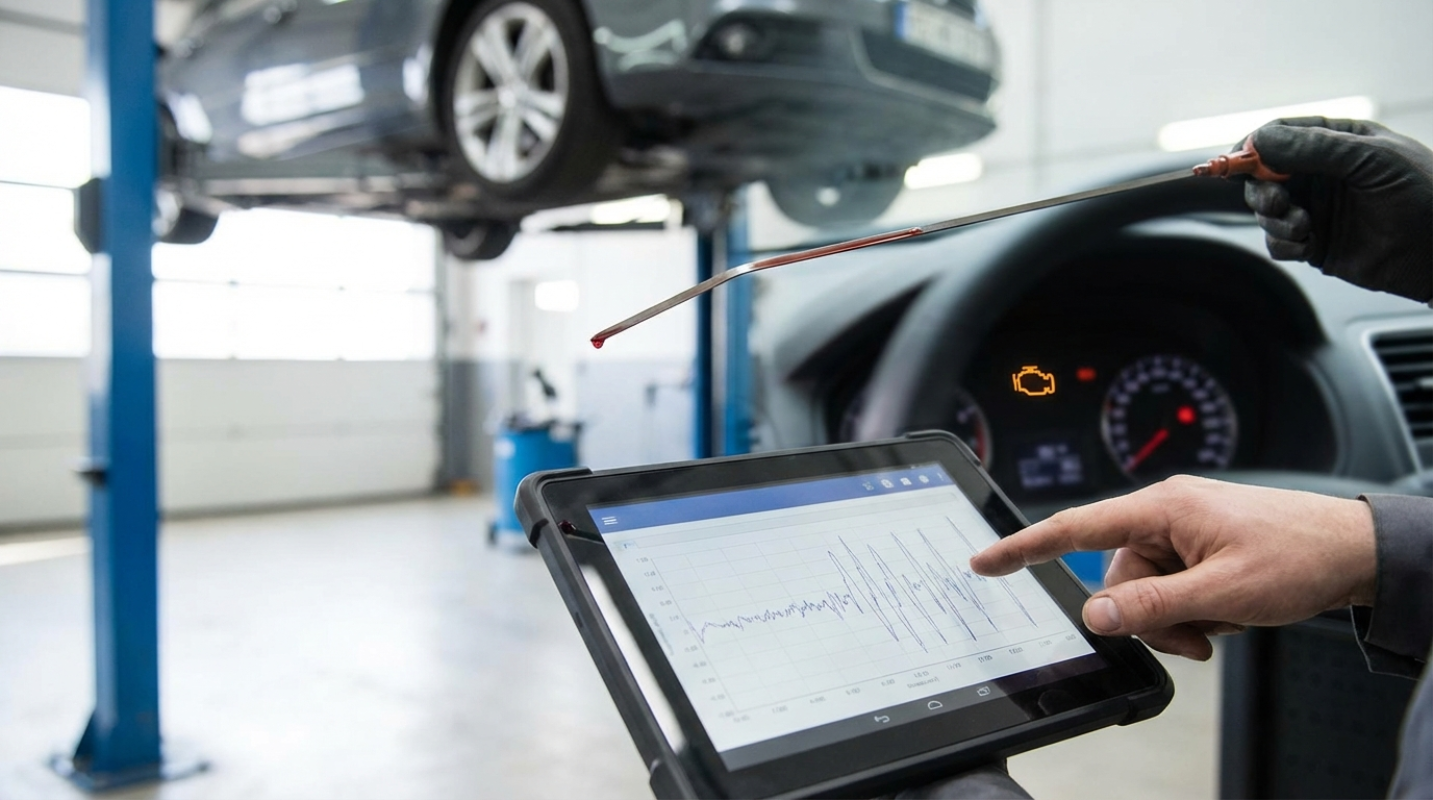
In 2026, the gold standard for replacement is still the 12,000 to 15,000-mile interval. But if you live in a particularly dusty area or spend a lot of time on dirt roads, you might need to change it every 6,000 miles. Don't wait for the "Check Engine" light to come on. By the time the computer throws a code for a lean or rich condition, the damage to your MAF sensor or cylinder walls might already be done.
There's also a weird phenomenon called the "Used Filter Paradox." Believe it or not, a slightly used filter is actually more efficient at trapping fine dust than a brand-new one. This is because the initial layer of dust (the "dust cake") acts as an extra filtration barrier. But don't let that be an excuse for neglect. Once that pressure drop exceeds a certain point, the risk of the filter collapsing or bypassing the seal becomes too high to ignore.
Choosing the Right Filter for 2026
When you're standing in the aisle at the auto parts store, you'll see a lot of options. Standard paper filters are usually the best bet for 95% of drivers. They're cheap, effective, and won't mess with your sensors. Reusable "performance" filters can be tempting, but they require careful maintenance. If you over-oil them, you'll likely end up spending $200 on a new MAF sensor later.³
Always make sure the filter is seated perfectly in the housing. A high-quality filter that's installed crooked is worse than a dirty filter that's sealed tight. Unfiltered air entering through a gap in the airbox is the fastest way to kill an engine. It's a small task, but taking five minutes to make sure a proper fit is the best ROI you'll ever get on car maintenance.
Sources:
1. Engine Air Filter Myths and Realities