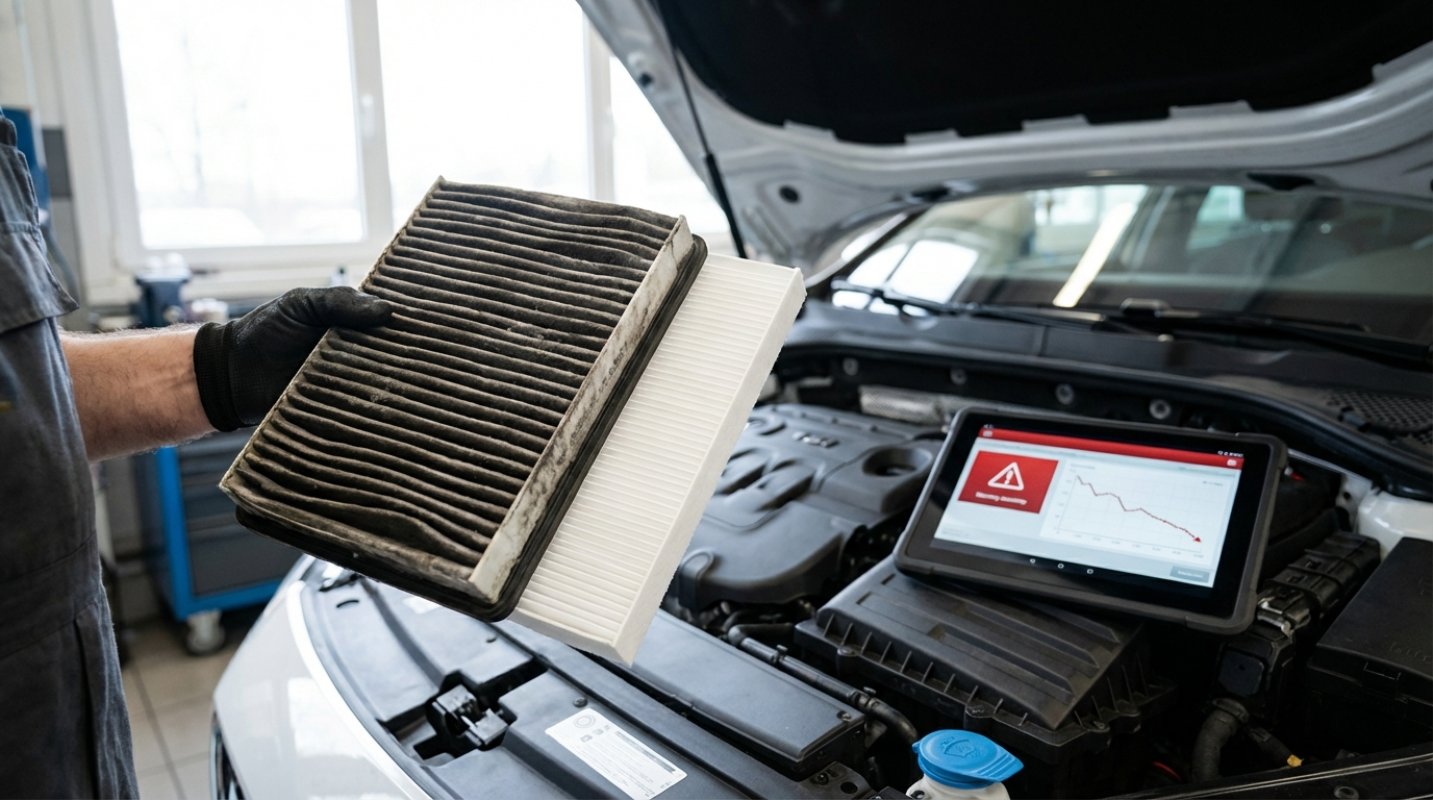
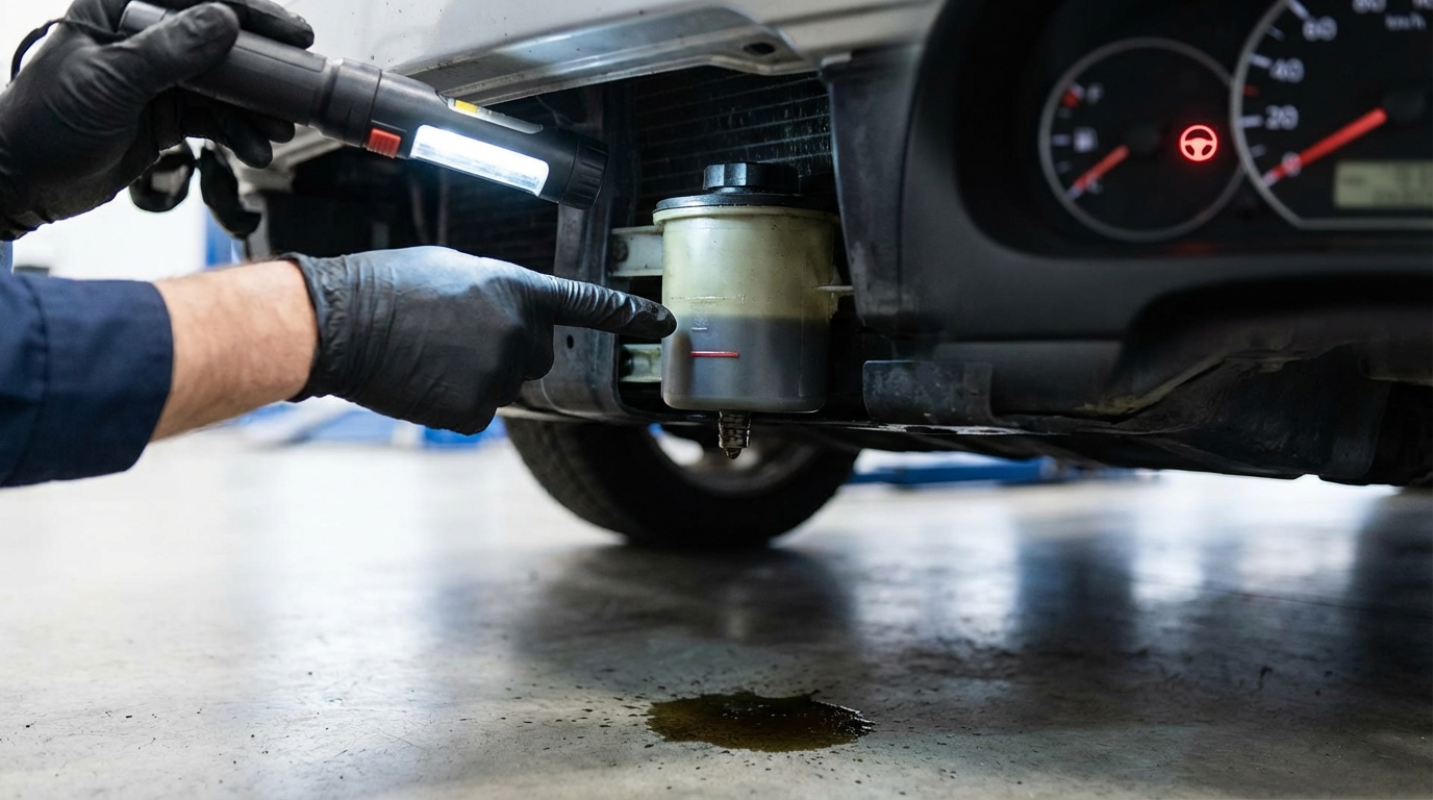
 (Image source: Gemini / Landon Phillips)
 Have you ever pulled out of your driveway and noticed a mysterious red or amber puddle staring back at you? Or maybe you’ve noticed that turning your steering wheel feels more like a gym workout than a casual drive. If so, you’re likely dealing with a power steering fluid leak. By 2026, many brand-new cars have fully transitioned to Electric Power Steering (EPS), which doesn't use fluid at all. But millions of vehicles on the road today still rely on hydraulic systems. These systems use pressurized fluid to make steering effortless. When that fluid escapes, your car loses its "muscle," and you’re left wrestling with the steering wheel.
This guide covers the red flags you need to watch for, where those leaks usually hide, and how to handle repairs without getting taken for a ride at the mechanic.
Why Power Steering Fluid Matters and the Urgency of Leaks
Think of power steering fluid as the lifeblood of your car’s handling. It serves three main roles. It transfers pressure from the pump to the steering rack, it lubricates moving metal parts, and it keeps the entire system cool. Without it, the friction and heat would melt your steering components into a very expensive paperweight.
A leak isn't just a messy driveway problem. It’s a safety risk. If your fluid drops too low while you're driving, you could lose steering assistance suddenly during a sharp turn or emergency maneuver. That’s a recipe for an accident.
Beyond safety, ignoring a small leak is a great way to turn a $200 hose repair into a $2,000 steering rack replacement. This article covers the warning signs, common leak sources, and the steps you should take to keep your 2026 maintenance schedule on track.
The Auditory and Tactile Warning Signs (What Your Car Is Telling You)
Your car is actually pretty vocal when it’s unhappy. You just need to know what to listen for. The most common "cry for help" is a high-pitched squeal or a low groaning sound when you turn the wheel.
- The Squeal: This usually happens when you’re at low speeds, like when you’re parallel parking. If you hear a sharp screech when you hit the "full lock" (turning the wheel as far as it goes), your pump is likely struggling to circulate fluid.
- The Groan: A deep, vibrating moan often means air has entered the system because the fluid level is too low. It’s the sound of the pump cavitating, which is basically the pump trying to "chew" on air bubbles.
- The Stiffness: Does the wheel feel heavy or "notchy"? If the steering effort feels inconsistent (easy one second, hard the next) you’re probably losing hydraulic pressure. It’s like trying to move a heavy weight through molasses.
- The Shudder: Sometimes a leak causes a physical vibration or shudder through the steering wheel when you’re idling or turning slowly. This is a sign that the pump isn't providing a steady stream of pressure to the rack.
Visual Indicators (Spotting the Fluid and Identifying the Source)
If you suspect a leak, the ground under your car is your first piece of evidence. Power steering fluid has a distinct look and smell. It usually smells a bit like burnt oil or marshmallows, and its color tells a story about the health of your system.
- Red or Pink: This is usually Automatic Transmission Fluid (ATF), which many manufacturers (like Toyota or Subaru) use in their power steering systems.
- Clear or Amber: This is standard, dedicated power steering fluid.
- Green, If you drive a European car like an Audi or BMW, you might see a bright green synthetic fluid (often Pentosin).
- Dark Brown or Black: This is a bad sign. It means your fluid is old, contaminated, or has been "cooked" by excessive heat. You need a flush immediately.
So where is it coming from? Most leaks happen in three places. The high-pressure hose is a frequent culprit because it’s constantly being flexed. The steering rack is another "hot spot," specifically the seals at the ends. A pro tip for 2026 DIYers is the "Boot Test." Squeeze the rubber bellows on the ends of your steering rack. If they feel squishy or full of liquid, the internal seals have failed, even if you don't see a puddle yet.¹
Advanced Diagnostics and DIY Checks vs Professional Repair
Checking your fluid is the easiest maintenance task you can do. Most cars have a translucent reservoir, so you can see the level without even opening the cap. Just make sure you check it according to your manual. Some cars require the engine to be warm, while others need it cold.
Whatever you do, don't fall into the "Top-Up Trap." Simply adding more fluid every week masks a bigger problem. Even worse, using the wrong fluid can chemically destroy your seals. If your car requires specific Honda fluid or European CHF, and you pour in "universal" fluid from a gas station, you’re basically melting your O-rings from the inside out.
If you can't find the leak, mechanics in 2026 often use a "clean-to-confirm" method. They degrease the engine, dry it, and then turn the wheel from lock to lock to see exactly where the fresh fluid escapes. For those tiny, invisible "mystery" leaks, a UV dye kit is your best friend. You add the dye, drive for a day, and then use a blacklight to find the glowing trail.
Preventative Maintenance and Keeping Your Steering System Healthy
The best way to handle a power steering leak is to never have one in the first place. You should make it a habit to inspect your hoses every time you get an oil change. Look for "sweating" (where the hose looks damp but isn't dripping) or any signs of the rubber becoming brittle or swollen.
Heat is the number one killer of power steering systems. If you do a lot of heavy towing or spirited driving, your fluid breaks down faster. A simple fluid exchange every 50,000 miles is cheap insurance compared to the cost of a new steering rack.
In 2026, the average cost to replace a power steering pump sits between $500 and $950. If the steering rack goes, you’re looking at a bill between $1,000 and $2,800 once you factor in the mandatory wheel alignment. Addressing a $150 hose leak today saves you thousands tomorrow. Your car is talking to you through those squeals and heavy steering. It’s worth listening.
Sources:
1. Power Steering Leak Diagnosis and Repair Guide
This article on aidriv.com is for informational and educational purposes only. Readers are encouraged to consult qualified professionals and verify details with official sources before making decisions. This content does not constitute professional advice.