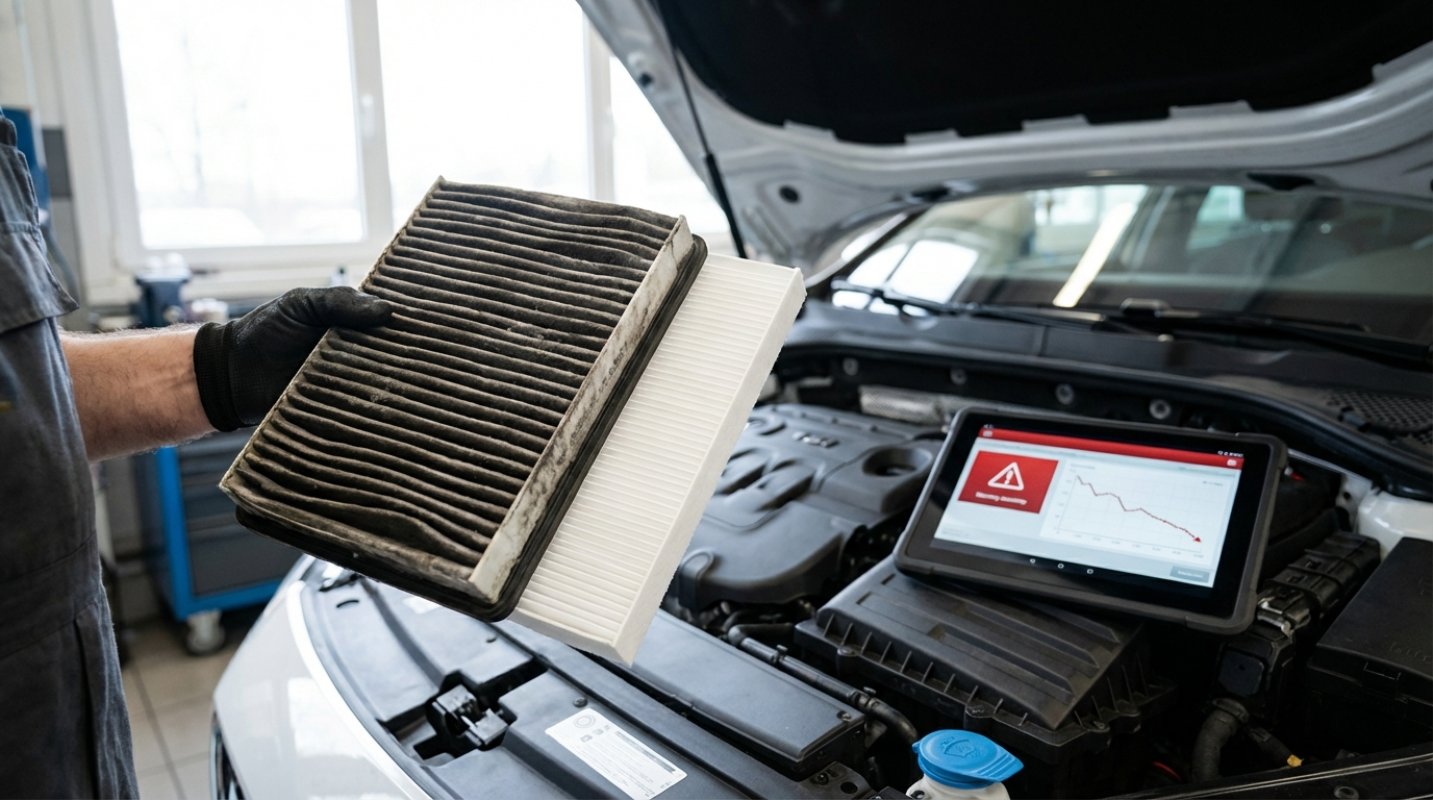
 (Image source: Gemini / Landon Phillips)
 You’re sitting at a red light, the engine is idling smoothly, and everything feels normal. The light turns green, you press the accelerator, and the engine screams. The tachometer needle flies toward the red line, but your car barely crawls forward. It feels like your tires are spinning on ice, yet the road is bone dry. This is the classic "rubber band" effect of transmission slippage. It’s frustrating, it’s jarring, and if you’re driving in 2026, it’s a signal that your vehicle is screaming for help.
So what does this actually mean? Simply put, transmission slippage happens when the power generated by your engine isn’t making its way to the wheels. There’s a disconnect in the middle of the drivetrain. Think of it like a cyclist whose chain is skipping over the gears. You’re putting in the work, but the bike isn't going anywhere. In an automatic or manual gearbox, this isn't just a minor annoyance. It’s a symptom of internal wear that requires immediate attention before it turns into a catastrophic failure.
The urgency here can’t be overstated. In 2026, with the average vehicle age on the road hovering around 12.6 years, many of us are driving cars that have seen a lot of miles. Slippage is often the final warning shot before a transmission gives up the ghost entirely. This guide will walk you through the tell-tale symptoms, the mechanical differences between gearboxes, and the simple checks you can do today to save yourself thousands of dollars in repair bills.
The Five Tell-Tale Symptoms of Transmission Slippage
Detecting slippage early is the difference between a five hundred dollar fluid service and an eight thousand dollar replacement. You need to be tuned into how your car feels every day. If something feels "off" during a shift, it probably is.
Symptom 1, High or Erratic Engine Revving
This is the most common sign. You’ll notice the engine RPMs spiking without a corresponding increase in speed. It feels like the car is "searching" for a gear but can't quite grab it. If you’re merging onto a highway and the engine is roaring but you’re still doing 40 mph, your transmission is definitely slipping.
Symptom 2, Delayed or Harsh Shifting
Have you ever shifted from Park into Drive and waited two or three seconds for the car to actually engage? That’s delayed engagement. It’s often followed by a "clunk" or a "thud" as the gear finally slams into place. This usually points to low fluid pressure or worn-out internal seals that can't hold the pressure needed to move the gear sets.
Symptom 3, Burning Smell
If you catch a whiff of something acrid, like burnt toast or scorched hair, stop the car. Transmission fluid is designed to withstand heat, but when internal components slip, they create massive amounts of friction. This friction cooks the fluid. Once that fluid is burnt, it loses its ability to protect the metal parts, leading to a rapid downward spiral of damage.
Symptom 4, Loss of Power or Inability to Maintain Speed Uphill
Gravity is a great diagnostic tool. When you're heading up a steep incline, the transmission is under maximum load. If the car starts losing speed even though you’re giving it more gas, the internal clutches or bands are likely failing to hold the gear. It’s a clear sign that the physical connection inside the box is failing.
Symptom 5, Check Engine Light or Transmission Warning Indicator
Modern cars are smarter than we give them credit for. Your onboard computer is constantly monitoring the input and output speeds of the transmission. If it sees the engine spinning much faster than the output shaft, it will trigger a code like P0730, which literally means "Incorrect Gear Ratio."¹ Don't ignore that little orange light. It’s the digital equivalent of a smoke alarm.
Manual vs. Automatic, Subtle Differences in Slippage Presentation
Although the result is the same, the "why" behind the slippage depends on what kind of gearbox you’re rowing.
In an automatic transmission, the culprit is usually hydraulic. It’s a complex system of fluid, pumps, and solenoids. If a solenoid fails, the fluid doesn't go where it’s supposed to, and the gear won't engage. Torque converter problems are also common. If the internal fins are damaged or the lock-up clutch is toast, you’ll feel that classic slipping sensation during cruising speeds.
Manual transmissions are much more "mechanical." When a manual slips, it’s almost always the clutch disc itself. Over time, the friction material on the clutch wears down until it can no longer grip the flywheel. You’ll notice this most in high gears. A classic test is to drive at a low speed, shift into 4th or 5th gear, and floor it. If the RPMs rise but the speed doesn't, your clutch is finished.
The common thread for both is fluid. In an automatic, the fluid is the "blood" that makes everything move. In a manual, the gear oil lubricates and cools. If the fluid is low or dirty, the system fails. Experts in 2026 suggest that 90% of all transmission failures are directly linked to fluid degradation or overheating.
Early Detection, Simple Checks You Can Perform Today
You don't need to be a certified technician to do some basic detective work. In fact, you should be doing these checks every few months just to stay ahead of the curve.
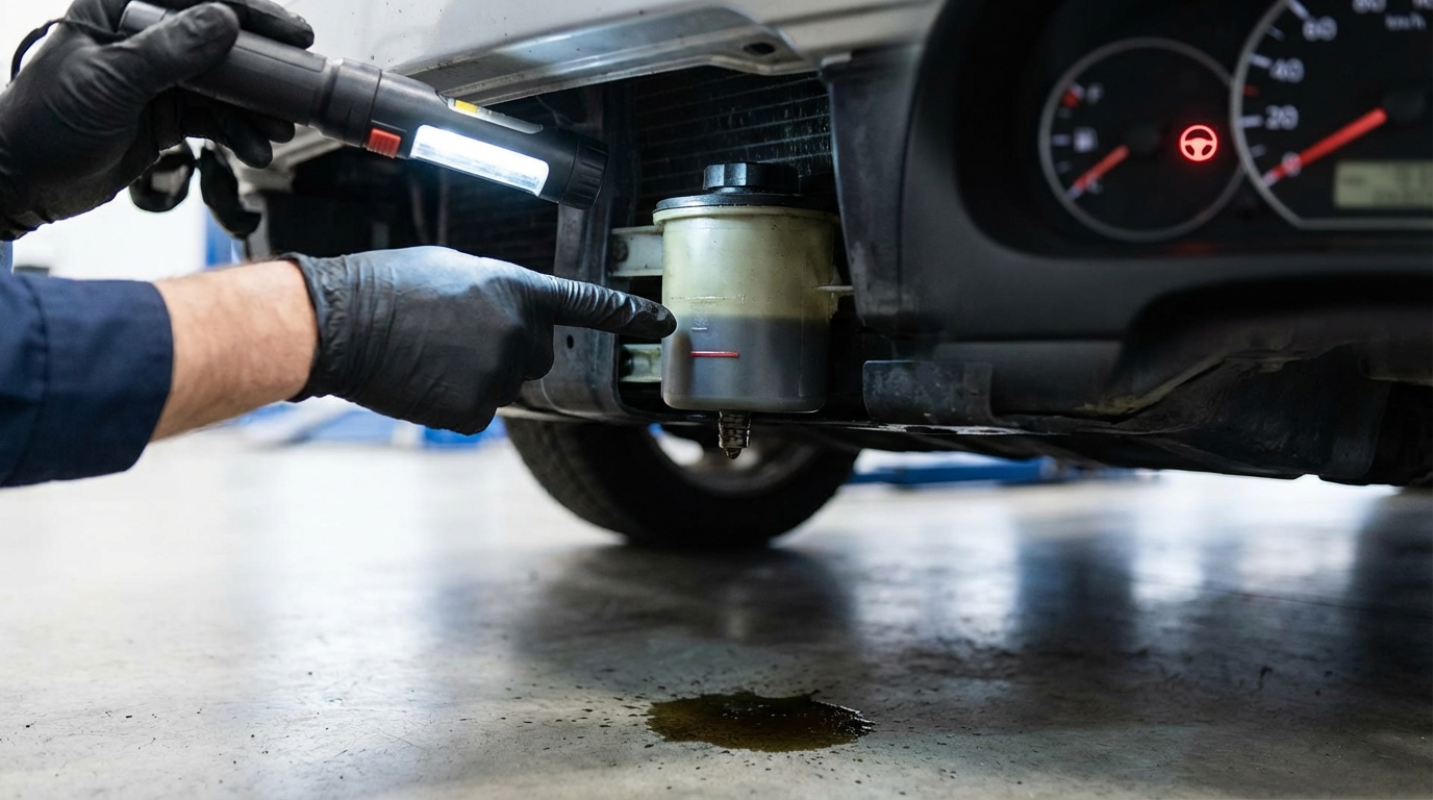
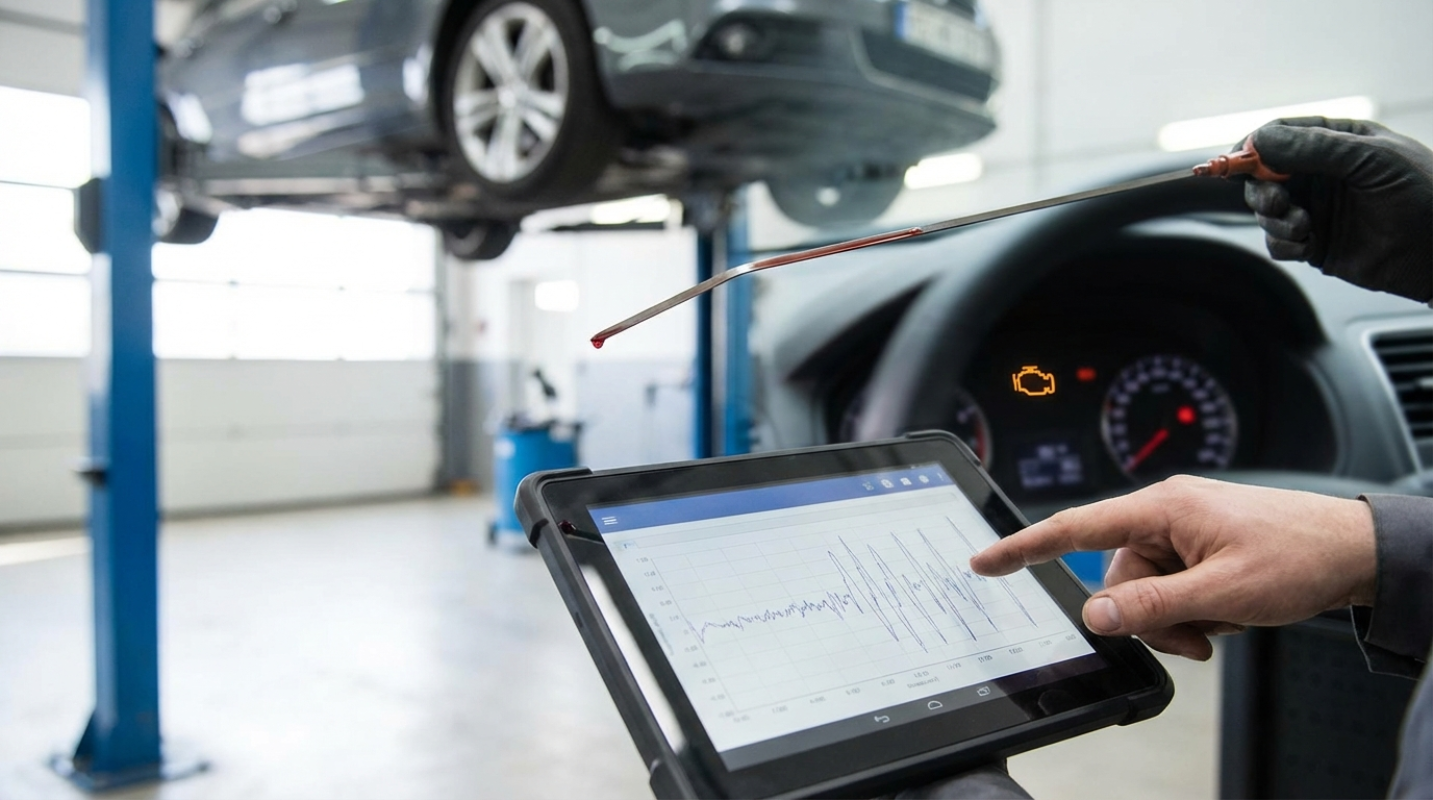
First, do a DIY fluid check if your car has a dipstick. Many modern cars are "sealed," but if yours isn't, pull the stick. Healthy fluid is translucent red and smells slightly sweet. If it’s dark brown or black, it’s already past its prime. If you see "glitter" or silver flakes in the fluid, that’s metal from your gears. That’s a bad sign.
Next, use your ears. Listen for whining, buzzing, or humming noises while you’re driving. A whining sound that gets louder as you accelerate often points to a struggling fluid pump. Grinding, on the other hand, is usually a sign of physical metal-on-metal contact.
Finally, try the "warming up" test. Does the slippage only happen when the car is cold? Or does it start after you’ve been driving for twenty minutes? Slippage that happens only when hot often indicates that the fluid is thinning out too much or that internal seals are leaking once they expand with heat.
The Cost of Waiting, Diagnostic Next Steps and Repair Outlook
At what point do you stop driving? If the slippage is consistent or if the car is dropping into Neutral while you’re in motion, park it. Driving a slipping transmission is dangerous. You could lose power while turning across traffic or have the wheels lock up unexpectedly.
When you take it to a pro, they’ll start by scanning for Diagnostic Trouble Codes (DTCs). Codes like P0700 or P0730 provide a roadmap for the technician.⁵ They’ll also look at the "adaptives," which is the data the car stores about how hard it has to work to complete a shift. If the computer is having to "over-compensate" to get into gear, it knows the end is near.
The prognosis varies wildly based on when you catch it. If you catch it early, a simple fluid exchange or a new solenoid might cost you a few hundred dollars. If you wait until the fluid is black and the gears are grinding, you’re looking at a full overhaul. In 2026, a rebuilt transmission for a standard sedan can run between $3,000 and $5,000, while high-performance dual-clutch systems in European cars can easily top $8,000.
Maintaining your transmission is about being proactive. Most manufacturers suggest long intervals, but many mechanics recommend a fluid change every 30,000 to 60,000 miles, especially if you do a lot of city driving or towing.⁷ It’s a small price to pay to keep your car connected to the road.
Sources:
1. Common Transmission Trouble Codes
2. How Often to Change Transmission Fluid
3. Diagnostic Transmission Error Codes
4. Shift Smoothly with Quality Automatic Transmission Fluid
5. Transmission Fluid Change Intervals Guide
This article on aidriv.com is for informational and educational purposes only. Readers are encouraged to consult qualified professionals and verify details with official sources before making decisions. This content does not constitute professional advice.