 (Image source: Gemini / Landon Phillips)
 You probably didn't think much about your tires when you drove your new electric vehicle (EV) off the lot. You were likely too busy enjoying the silent cabin, the sleek touchscreen, and that stomach-flipping acceleration. But as we move into 2026, many EV owners are hitting a frustrating milestone. They're heading into the shop for their first service and realizing their tread is almost gone before they've even finished their second year of ownership.
It's a bit of a shock to the system. You might be used to getting 50,000 miles out of a set of tires on your old gas car, so seeing bald spots at 22,000 miles feels like a defect. It isn't a defect, though. It's physics. The way an EV interacts with the pavement is fundamentally different from a traditional internal combustion engine (ICE) vehicle.
This article will help you understand why your tires are disappearing faster than you expected. We'll look at the unique stresses of weight and torque, the specialized technology manufacturers are using to fight back, and what you can do to keep your rubber on the road for as long as possible.
The Core Differences Weight Torque and Instant Power Delivery
If you feel like your EV is eating through tires, you're not imagining things. Recent data shows that EVs typically wear through tires 15% to 30% faster than gas cars.¹ Although a standard set of tires on a sedan might last 40,000 miles, an EV owner is lucky to see 30,000 miles. Why is the gap so large? It comes down to two main culprits: mass and muscle.
First, let's talk about the weight. Batteries are heavy. A typical EV battery pack can add between 800 and 1,200 pounds to a vehicle's total mass. This means your tires are constantly supporting a much higher vertical load. Every time you turn the wheel or hit a bump, that extra weight pushes the rubber harder into the asphalt. This increased pressure causes the tire to deform more as it rolls, which generates heat and speeds up the breakdown of the rubber compounds.
Then there's the torque. This is the "muscle" part of the equation. In a gas car, power builds up as the engine revs. In an EV, you get 100% of the motor's torque the moment you touch the pedal. This creates what experts call the sandpaper effect. Every time you launch from a green light, there are tiny, invisible slips between the tire and the road. These micro-slips act like a belt sander on your tread.
We also have to consider regenerative braking. Although "one-pedal driving" is a great way to save your brake pads, it shifts the entire job of stopping the car onto your tires. This creates a torque reversal. Instead of just being pushed forward, the tire is suddenly being pulled backward by the motor to harvest energy. This back-and-forth stress can lead to uneven wear patterns like cupping or feathering, especially if you aren't staying on top of your maintenance.
Tire Technology Adaptation What Manufacturers Are Doing
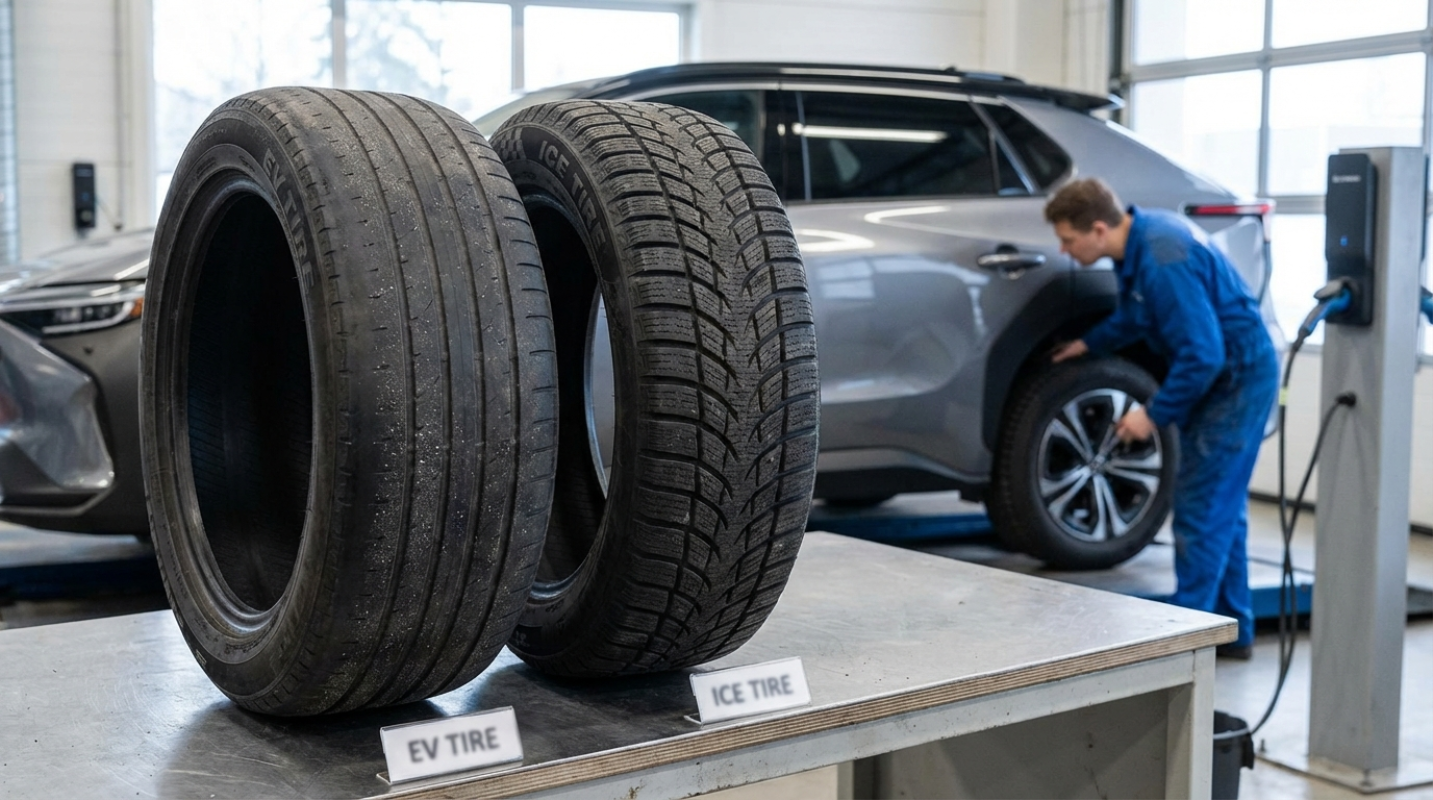
You might be tempted to save a few hundred dollars by putting standard ICE tires on your EV when the first set wears out. Don't do it. Standard tires aren't built for the unique demands of an electric drivetrain. Using them can lead to a shorter lifespan, worse handling, and even safety risks.
Manufacturers have responded by creating EV-specific tires. You'll often see these marked with "XL" for Extra Load or "HL" for High Load. These tires have reinforced sidewalls designed to handle the massive weight of the battery without bulging or failing. If you put a standard tire on a heavy EV, the sidewall might flex too much, which ruins your handling and could lead to a blowout.
The rubber itself is different, too. Companies like Michelin and Goodyear use high-silica, resin-infused compounds for their EV lines.² These materials are engineered to be stiff enough to resist the "scrubbing" caused by instant torque, yet soft enough to provide the grip you need for safety. It's a difficult balance to strike.
Noise is another big factor. Since there's no engine roar to drown out the sounds of the road, tire hum becomes very noticeable in an EV. To fix this, many EV-specific tires now include a thick layer of acoustic foam inside the tire carcass. This foam acts like a muffler for the road, absorbing vibrations before they reach the cabin. If you switch to "regular" tires, you might be surprised by how much louder your car suddenly feels.
Practical Implications Recognizing and Managing Accelerated Wear
So, how do you know if your tires are giving up the ghost? You need to be a bit more proactive than you were with your old gas-guzzler. Because EVs are so heavy, they are much more sensitive to alignment issues. Even a tiny misalignment can cause one side of the tire to "scrub" against the road, killing the tread in just a few thousand miles.
Keep a close eye on your shoulder wear. If the edges of your tires are wearing down faster than the center, it's a sign that the heavy weight of the car is a lot of the tire during cornering. You should also look for uneven "feathering" on the tread blocks, which often points to issues with your regenerative braking habits or alignment.
Maintenance schedules for EVs need to be much tighter. Although you might have rotated your tires every 10,000 miles in the past, you should aim for every 5,000 to 7,000 miles now. Tesla, like, recommends a rotation every 6,250 miles or whenever there's a tread depth difference of 2/32 of an inch between the front and back.³
Pressure management is your best friend for saving money. EVs are incredibly sensitive to PSI. If your tires are even 5 PSI under-inflated, the heavy load will cause them to run much hotter. This doesn't just wear out the rubber 10% faster; it also creates more rolling resistance, which can cut your driving range by 5% to 10%.⁴ Checking your pressure once a month is the easiest way to protect your investment.
Getting the most from Tire Life and Safety on Your EV
At the end of the day, owning an EV means accepting that tires are now a more frequent "fuel" cost. The same instant power and heavy battery that make your car fun and efficient also make it a tire-shredding machine. But you aren't powerless in this situation.
By choosing tires specifically designed for the high load and high torque of an electric drivetrain, you're making sure that your car handles the way it was engineered to. You'll get a quieter ride and better range, which helps offset the higher upfront cost of the tires themselves. (Remember, EV tires can cost 20% to 30% more than standard ones).⁵
The most important thing you can do is change your mindset. Don't wait for a vibration or a warning light to check your rubber. Be proactive with rotations, keep your alignment sharp, and resist the urge to floor it at every single stoplight (well, most of them). Proper tire management is about more than just saving money. It's about making sure that when you need to stop or turn in an emergency, your tires have enough "meat" left to do their job.
Sources:
2. Why do electric car tires wear out so fast?
3. Why do EV tires wear out faster than gas cars?