 (Image source: Gemini / Landon Phillips)
 You probably bought an electric car because you were tired of the constant dance of oil changes, spark plug swaps, and timing belt anxieties. It's a great feeling to skip the service bay for the drivetrain, but there is a reality check coming for your undercarriage. Although your motor might be simpler, the parts holding your car off the ground are working harder than they ever did in the internal combustion era.
We are now well into 2026, and the data is clear: electric vehicles (EVs) are putting a massive strain on traditional suspension components. It makes sense when you think about it. You are driving a vehicle that weighs significantly more than its gas powered equivalent, often by 15 to 20 percent. That extra weight doesn't just sit there. It pushes, pulls, and pounds on your shocks and bushings every time you hit a pothole or take a corner. If you want your ride to stay smooth and your tires to last longer than a season, you need to change how you think about suspension maintenance.
The Weight Challenge, Why EV Suspension Needs Special Attention
The biggest culprit is the battery pack. In a heavy EV, the battery isn't just a component, it is a structural slab of weight that changes the entire physics of the car. When you combine this massive sprung mass with the instant torque these motors provide, you get a recipe for accelerated wear. Have you noticed how your EV feels like it wants to "squat" when you floor it? That is instantaneous load transfer, and your rear suspension is the one taking the punch.
This isn't just about the total weight, though. It's also about the mass, the weight of the wheels, tires, and brakes that the suspension has to manage. Because EVs often use larger wheels and heavier regenerative braking components, the shocks have to work overtime to keep those wheels glued to the road. Recent data shows that EVs average about 266 problems per 100 vehicles, which is significantly higher than gas cars.² Much of this comes down to the driving experience, specifically how the car handles its own bulk.
Think of it like this: your suspension is carrying a grand piano in the trunk at all times. Every bushing, spring, and damper was designed to handle that load, but they are operating at the edge of their limits. This means the "grace period" you might have had with an older, lighter car simply doesn't exist here. When a part starts to go, it goes quickly because the forces involved are so much higher.
Key Components Under Increased Stress, What to Inspect Regularly
If you are looking for the weak links in your EV, start with the anti-roll bar links. Recent warranty data from 2025 and 2026 indicates these are the number one suspension failure point, accounting for nearly 10 percent of all EV warranty claims.¹ Why? Because they are the first line of defense against body roll in a 5,000 pound vehicle. When you turn, that weight wants to keep going straight, and the links are caught in the middle of that tug-of-war.
Next on the list are your control arms and bushings. Lower control arm failures are incredibly common because the rubber bushings get "squished" under the sustained heavy loads of the battery. If you hear a clunking sound when you go over a speed bump or pull into your driveway, there is a good chance your bushings have started to tear or deform. This is especially true for popular models like the Tesla Model 3 and Model Y, where the front upper control arms have become a well known maintenance item.⁴
If your car has air suspension, like many luxury EVs or high end trucks, you have another layer of complexity. These systems are fantastic for leveling out a heavy load, but the compressors and air bags are under constant pressure. You should be looking for "sagging" after the car has been parked overnight. If one corner is lower than the others, your system is leaking, and your compressor is likely overworking itself to compensate. Ignoring this will turn a simple bag replacement into a very expensive compressor failure.
Tire Management, The Suspension System's Closest Partner
You cannot talk about suspension without talking about tires. They are the two halves of the same system. In an EV, your tires are likely wearing out 20 to 30 percent faster than you are used to. This isn't just because of the weight, but also because of how the suspension reacts to that weight. If your alignment is even slightly off, the heavy mass of the car will "scrub" the tires against the pavement, chewing through the tread in a matter of months.
Proper inflation is your best friend here. Because EVs are so heavy, they require specific, often higher, tire pressures to maintain the integrity of the sidewall. If you run your tires low, you aren't just hurting your range, you are forcing the suspension to absorb impacts that the tire should have handled. This leads to premature strut failure. Always check your door placard and stick to those numbers religiously.
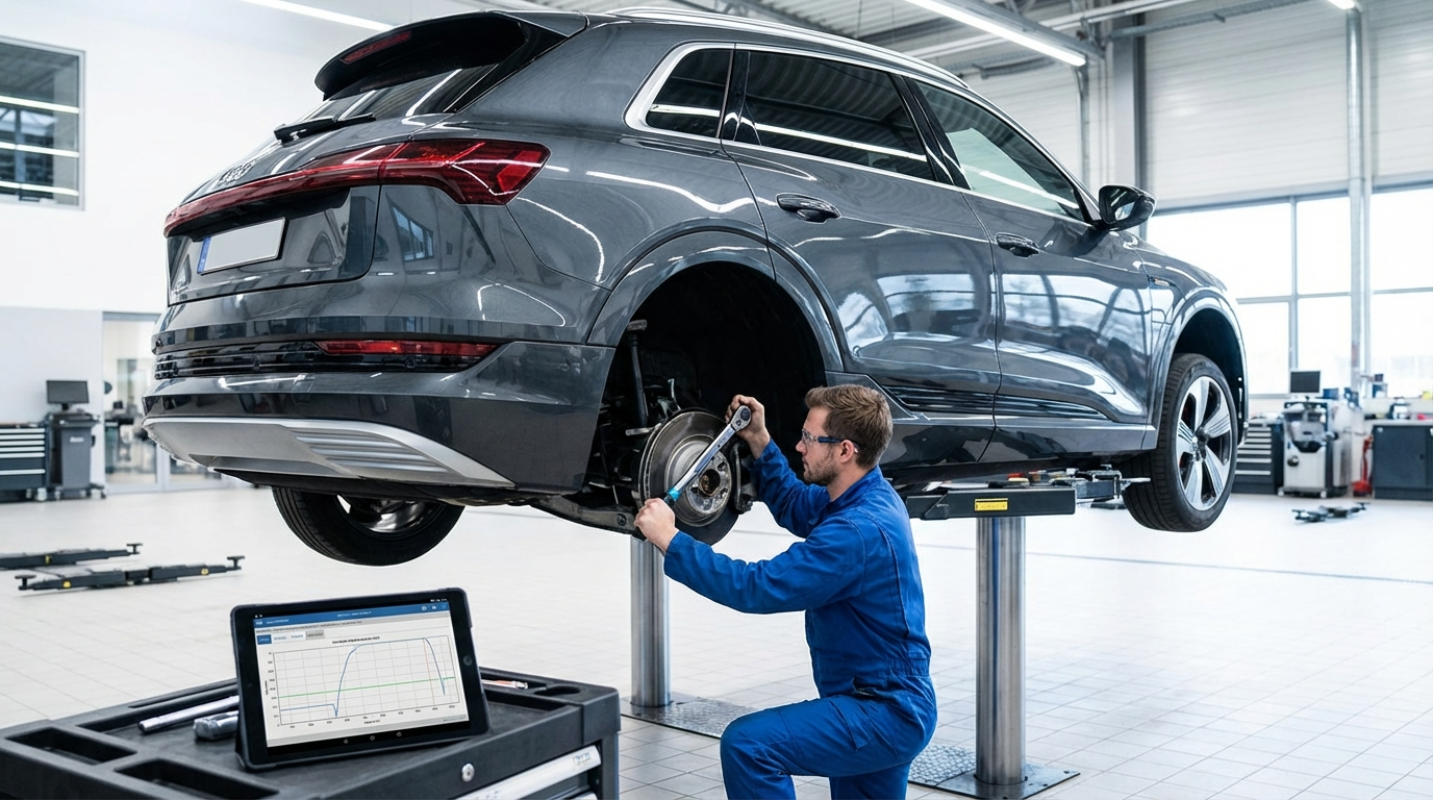
Alignment is the other big factor. The industry consensus for 2026 is that you need a mandatory alignment check every 12,000 miles or once a year.⁵ This is more frequent than the old "wait and see" approach for gas cars. Why the change? Because the instant torque can actually "pull" the vehicle out of alignment over time. Plus, modern EVs use complex sensors for lane keeping and emergency braking. If your alignment is off, those systems might get confused because the car isn't actually pointing where the steering wheel says it is.
Service Intervals and Proactive Maintenance for EV Owners
The "low maintenance" myth has led many owners to ignore their cars until something breaks. Don't fall into that trap. For a heavy EV, you should be getting a professional eyes on inspection every 7,500 miles. This usually lines up with your tire rotations. Ask the technician to specifically look for "tearing" in the control arm bushings and leaks in the shock absorbers.
If you find yourself needing to replace parts, you have a choice to make: OEM or aftermarket? For many, the factory parts are just fine, but they are often tuned for a balance of comfort that can feel a bit "floaty" or "under-damped" once the car is fully loaded. This is where specialized aftermarket upgrades come in. If you want a more controlled ride, there are better options available now than there were a few years ago.
Top Recommendations for EV Suspension Upgrades
- Koni Special Active Shocks: These use frequency selective damping to stay firm for handling but soften up for sharp bumps. They are a favorite for Tesla owners who find the factory ride too harsh.⁵
- Bilstein EVO S / SE: Specifically engineered for the higher mass of EVs, these are built to handle the extra weight without sacrificing ride quality. The SE line even plugs directly into your factory electronic damping system.¹
- Timbren SES Helper Springs: If you are driving a heavy EV truck or a commercial van like the Ford E-Transit, these prevent the rear end from sagging under load, which saves your primary springs from fatigue.
- Heavy Duty Sway Bar Links: Since these are the most common failure point, upgrading to a beefier aftermarket link can prevent that annoying rattling sound from coming back every two years.
Diagnosing Early Warning Signs, Protecting Your Ride Quality and Safety
How do you know if your suspension is waving a white flag? It usually starts with subtle changes in how the car feels. If you notice "wallowing" after you hit a dip in the road, meaning the car bounces two or three times before settling, your dampers are shot. In a heavy car, this is dangerous because it reduces the contact patch of your tires, making it harder to stop in an emergency.
Listen for the "EV clunk." Because electric motors are so quiet, you will hear suspension noises much earlier than you would in a loud gas car. Squeaks, groans, or metallic clicks when turning the wheel are all signs that a ball joint or a bushing has reached the end of its life. Don't ignore these. A failed ball joint can lead to a wheel collapsing, which is the last thing you want at highway speeds in a three ton vehicle.
Finally, pay attention to your range. It sounds strange, but a sagging or misaligned suspension can actually drop your efficiency by 5 to 10 percent because of increased rolling resistance.³ If you notice your miles per kilowatt hour dropping for no apparent reason, your suspension might be the hidden culprit. Keeping your car level and aligned isn't just about comfort, it's about making sure you actually get the range you paid for.
Sources:
1. Vivid Racing, Suspension Components and EV Trends
2. Utility Dive, JD Power Vehicle Quality Study
3. CleanTechnica, EV Maintenance and Efficiency