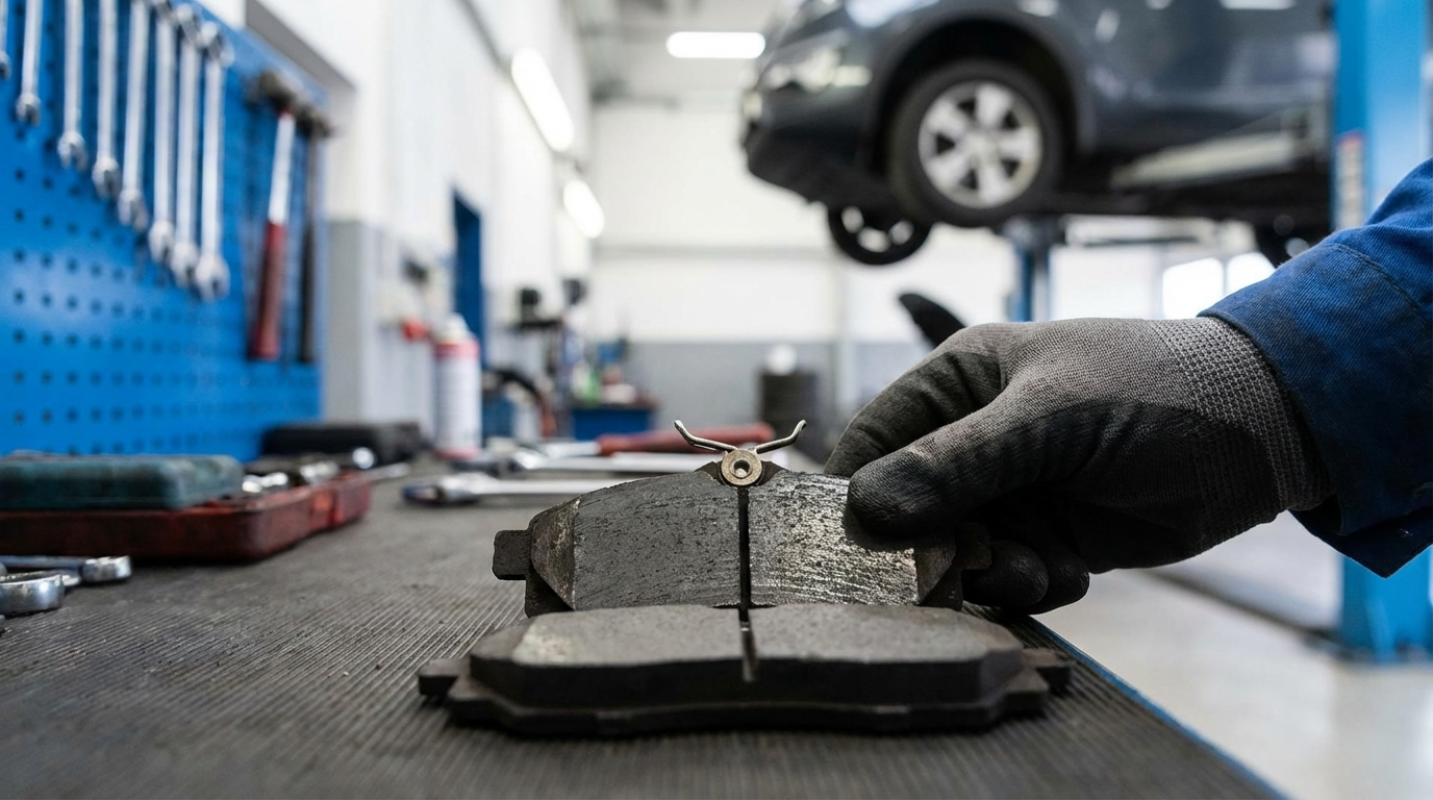
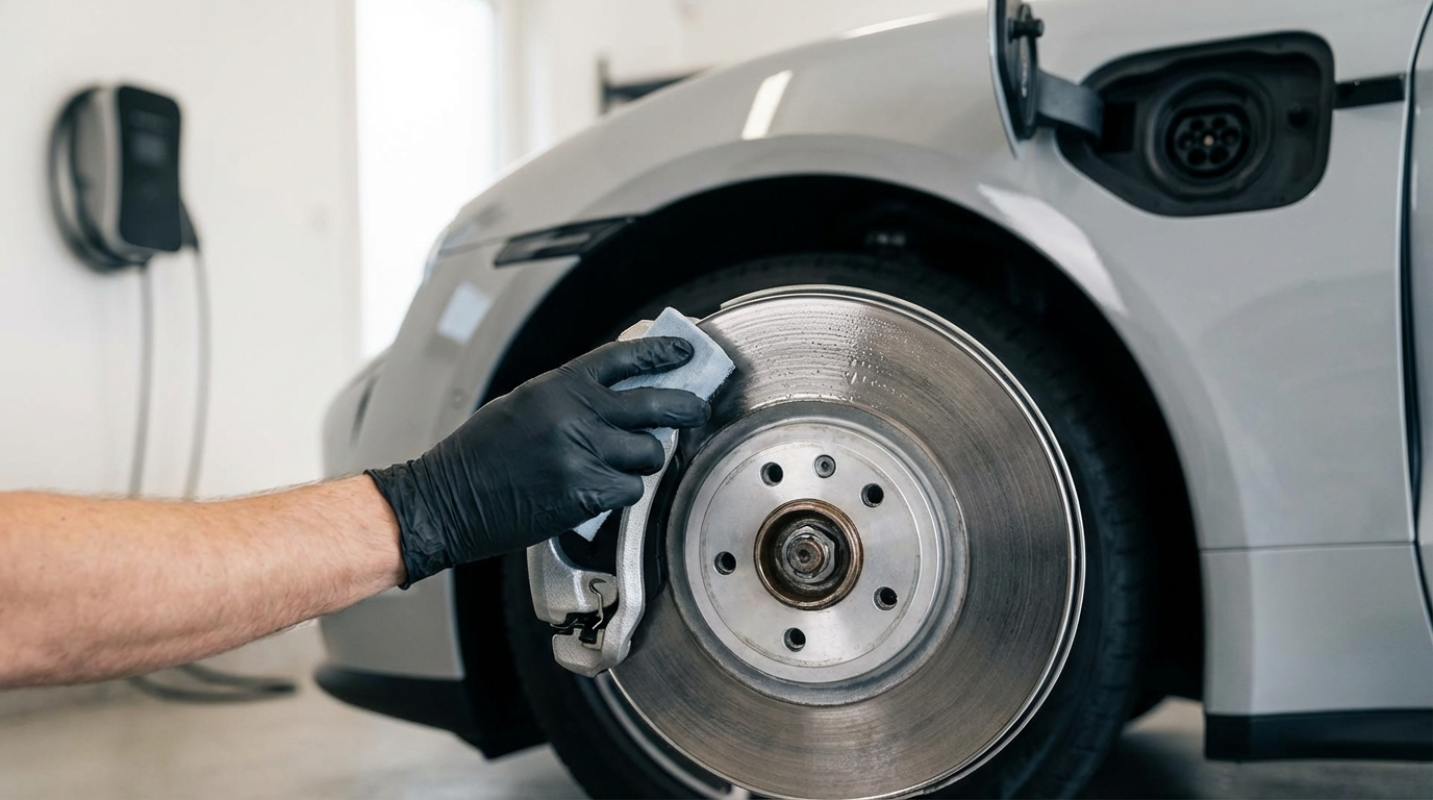
 (Image source: Gemini / Landon Phillips)
 You probably bought your electric vehicle with the promise of lower maintenance costs. No oil changes, no spark plugs, and certainly no frequent brake jobs. It sounds like a dream for your wallet. But there's a catch that many new EV owners aren't prepared for. Although your brake pads might last for over 100,000 miles, your rotors and calipers are actually at a higher risk of rotting away before they ever wear out.
It's a strange irony. By being efficient and using regenerative braking to save energy, you're inadvertently inviting rust to take up permanent residence in your braking system. If you don't take specific steps to prevent this, you could be looking at a multi thousand dollar repair bill long before your car is old.
Understanding the EV Braking Paradox Why Corrosion is a Unique EV Concern
The problem starts with regenerative braking. In a traditional gas car, every time you hit the pedal, friction pads clamp down on metal rotors. This generates intense heat and physically scrapes the surface of the metal clean.
In your EV, the electric motor does about 90 percent of that work by reversing its polarity to slow you down. This is great for your battery range, but it means your mechanical brakes are sitting idle.
Think of it like a muscle that's gone soft from lack of use. When those metal parts don't get hot, they don't evaporate the moisture that clings to them.
Back in 2023, a study by DEKRA found that roughly 28 percent of EV inspections showed significant brake corrosion or uneven deposits. This wasn't because the cars were driven poorly. It was because the brakes weren't being used enough to stay healthy.
In a gas car, the heat from friction acts as a natural hairdryer for your brakes. In an EV, that moisture just sits there, slowly eating away at the iron.
The Corrosion Culprits Moisture Road Salt and Environmental Factors
If you live in a snowy climate or near the coast, you're in the danger zone. Road salt is the ultimate catalyst for oxidation. When those chlorides get into the tight spaces of your calipers, they start a chemical reaction that doesn't stop just because you parked the car.
Humidity is another silent killer. Even if you don't drive in the rain, the condensation that forms during seasonal temperature swings can settle on your rotors.
Without the heat of friction to burn off that moisture, it begins to create "pitting." These are small craters in the metal that eventually make your brakes feel crunchy or loud.
Salt also loves to find its way into your caliper slide pins. These are the moving parts that allow your brakes to engage and disengage smoothly. When they seize up due to salt and grime, your brakes might stay partially applied, which kills your efficiency and ruins your pads.
Have you ever noticed a grinding sound the first time you pull out of your driveway after a rainstorm? That's the sound of your pads scraping off a thin layer of "flash rust." If you don't clear that off properly, it becomes permanent damage.
Proactive Maintenance Needed Steps to Keep EV Brakes Healthy
You don't have to just sit back and let the rust win. There are several ways to manually make sure your friction brakes stay in top shape.
The most effective method is a process called "brake bedding" or "burnishing." This involves intentionally using your friction brakes to generate heat and clear the rotors.
Most experts recommend doing this once a week or at least once every two weeks. You want to find a safe, empty stretch of road and get up to about 50 or 60 mph.
Once you're at speed, shift your EV into Neutral. This is a pro tip because shifting to Neutral usually disables the regenerative braking system entirely.
Although in Neutral, apply firm and consistent pressure to the brake pedal until you slow down to about 10 mph. Do not come to a complete stop, as that can leave pad deposits on a hot rotor.
Repeat this five to ten times. You'll likely smell a bit of "hot brake" scent, and that's actually a good thing. It means you've successfully baked off the moisture and polished the metal surface.
Top Recommendations
Advanced Protection Coatings Components and Upgrades
If you're buying a new EV in 2026, you might notice that manufacturers are finally taking this seriously. Some brands are changing the hardware itself to fight the rust.
Porsche uses something called Tungsten Carbide coated rotors on many of their high end models.² These rotors are nearly immune to rust and produce almost no dust. They stay shiny like a mirror for years.
Other manufacturers like GM use Ferritic Nitrocarburizing (FNC). This is a heat treatment that creates a hard "skin" on the rotor to prevent oxidation.
If your car didn't come with these from the factory, you can look into aftermarket ceramic coated rotors when it's finally time for a replacement. They cost more upfront but will save you from the "rot out" problem down the road.
Don't forget about the lubrication. For 2026 maintenance standards, you should be looking for silicone based lubricants for your caliper pins.
Silicone doesn't wash away in the rain as easily as older petroleum based greases. It keeps the moving parts sliding freely even when they're being pelted with road salt and slush.
Manufacturer Recommended Service Intervals
Every brand has a different philosophy on how to handle this. Here is what the current 2026 guidelines look like for major players in the market.
- Tesla, Every 12 months or 12,500 miles. You need to clean and lubricate the calipers, especially if you live in a cold climate.¹
- Rivian, Every 12 months or 12,000 miles. They focus heavily on caliper cleaning and recommend a full fluid flush every three years.³
- Ford, Every 12 months or 10,000 miles. They require a multi point inspection of the pads and lines to make sure nothing is seizing up.⁴
- Hyundai and Kia, Every 15,000 miles. These cars actually have a built in "Brake Disc Cleaning Mode" that you can activate by holding the Auto Hold button for a few seconds.⁵
- Volkswagen, The ID.4 uses rear drum brakes specifically because they are a closed system. This protects the internal parts from the environment, which is a clever way to solve the corrosion issue.
What to Do When You Spot Rust Repair vs Replacement Thresholds
So how do you know if your brakes are toast? You need to look through your wheel spokes at the rotors.
A little bit of orange dust after a rainy night is cosmetic. It will go away the next time you use the brakes. That isn't a reason to panic.
But if you see dark spots, deep grooves, or "pitting" that looks like the surface of the moon, you have a problem. This means the corrosion has moved past the surface and is now structural.
If you feel a vibration in the steering wheel when you brake, your rotors might be "warped" due to uneven rust buildup. At this point, you usually have to replace them.
The good news is that being proactive saves you a fortune. A simple cleaning and lubrication service might cost you $150 at a local shop. A full set of new rotors and pads for a heavy EV can easily top $1,500.
It's all about changing your mindset. You can't just ignore your brakes because the car slows itself down. You have to be the one to step in and give those mechanical parts the workout they need to stay alive.
Sources:
1. Tesla Maintenance Schedule and Caliper Service
2. Porsche Regenerative Braking and Coated Rotors
3. Rivian R1T and R1S Maintenance Guidelines
4. Ford Mustang Mach-E Service Requirements
5. Hyundai Ioniq Brake Cleaning Mode Instructions
This article on aidriv.com is for informational and educational purposes only. Readers are encouraged to consult qualified professionals and verify details with official sources before making decisions. This content does not constitute professional advice.