 (Image source: Gemini / Landon Phillips)
 Most people make the switch to an electric vehicle because they're tired of the endless cycle of oil changes, spark plugs, and timing belts. It feels like a relief to leave all those moving parts behind. But here is the reality check you might not have heard at the dealership. Your EV still has a complex circulatory system. If you treat it with a "set it and forget it" attitude, you might be looking at a very expensive battery replacement long before you intended.
Think of your EV cooling system as the digital equivalent of a high-end gaming PC. It isn't just there to keep things from melting. It's there to keep the battery, motor, and power electronics in a very specific "Goldilocks Zone" between 20°C and 30°C (68°F to 86°F). When you're pushing your car through a heatwave or plugging into a 350kW fast charger, that cooling system is the only thing standing between peak performance and permanent hardware degradation.
So what does this actually mean for you as an owner? It means that while you've traded oil for electrons, you still have to care about the "blood" of your car. Proactive maintenance is the best way to make sure your battery lasts for the next decade.
The Inner Workings of the EV Cooling Loop
To take care of the system, you first need to understand what is happening under the hood. Unlike an old gas car that mostly just cools the engine block, an EV has multiple loops. These loops manage the Battery Thermal Management System (BTMS), the drive motors, and the inverter.
The system relies on several key components to keep things moving. You have electric water pumps that circulate fluid, a radiator or heat exchanger at the front of the car, and a chiller. That chiller is a fascinating piece of tech. It uses the car's air conditioning system to refrigerate the coolant when the outside air is too warm to do the job.
In 2026, we're seeing more vehicles using specialized dielectric coolants. These aren't your standard hardware store fluids. Some modern EVs use low-conductivity liquids to prevent electrical shorts if a leak ever occurs inside the battery pack. Using the wrong fluid can lead to "jelling" or even electrical conductivity issues that could brick your car.¹
Routine Maintenance and What Owners Can Check
You don't need to be a certified technician to keep an eye on things. Although most EV systems are "closed," meaning they don't require frequent topping off, you should still perform a visual inspection every few months.
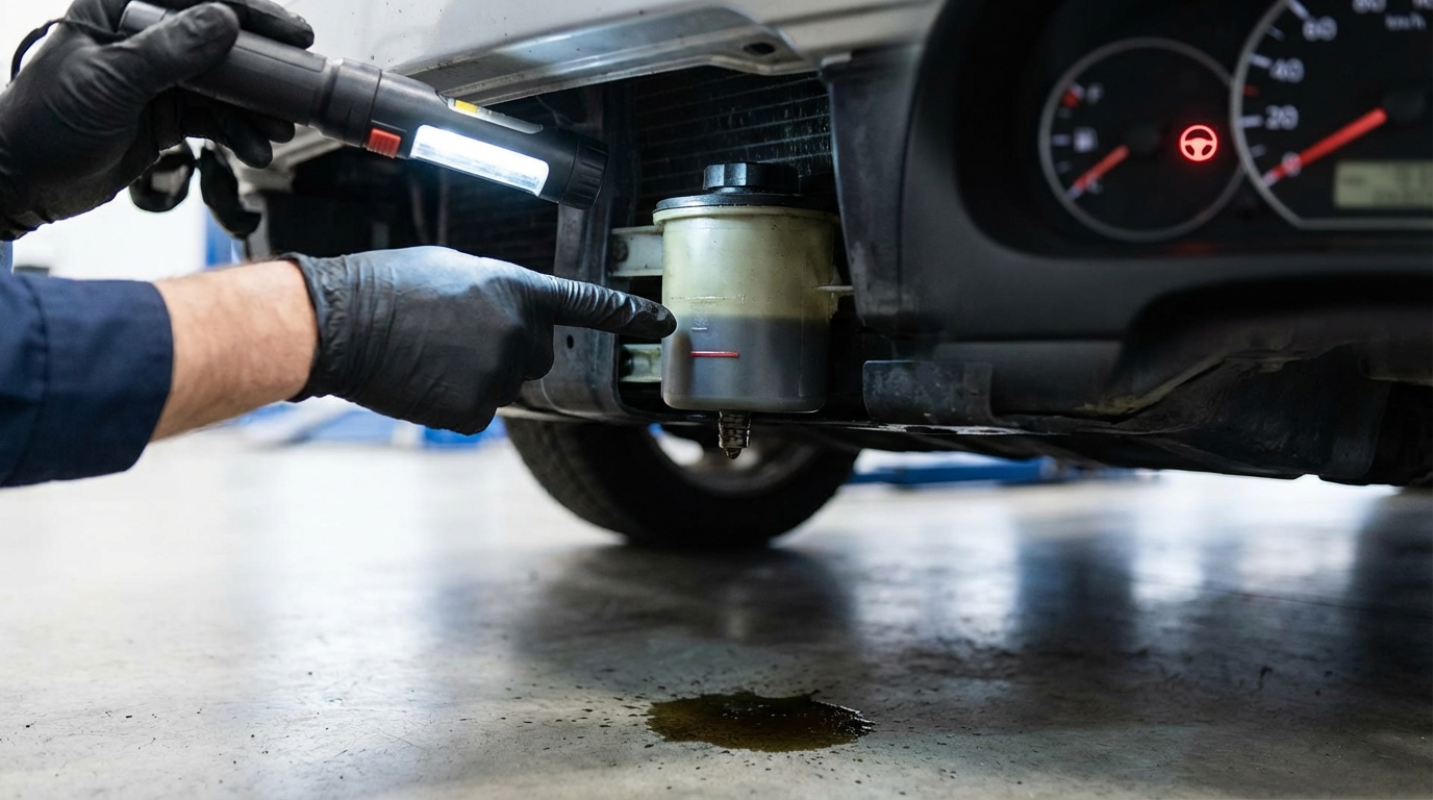
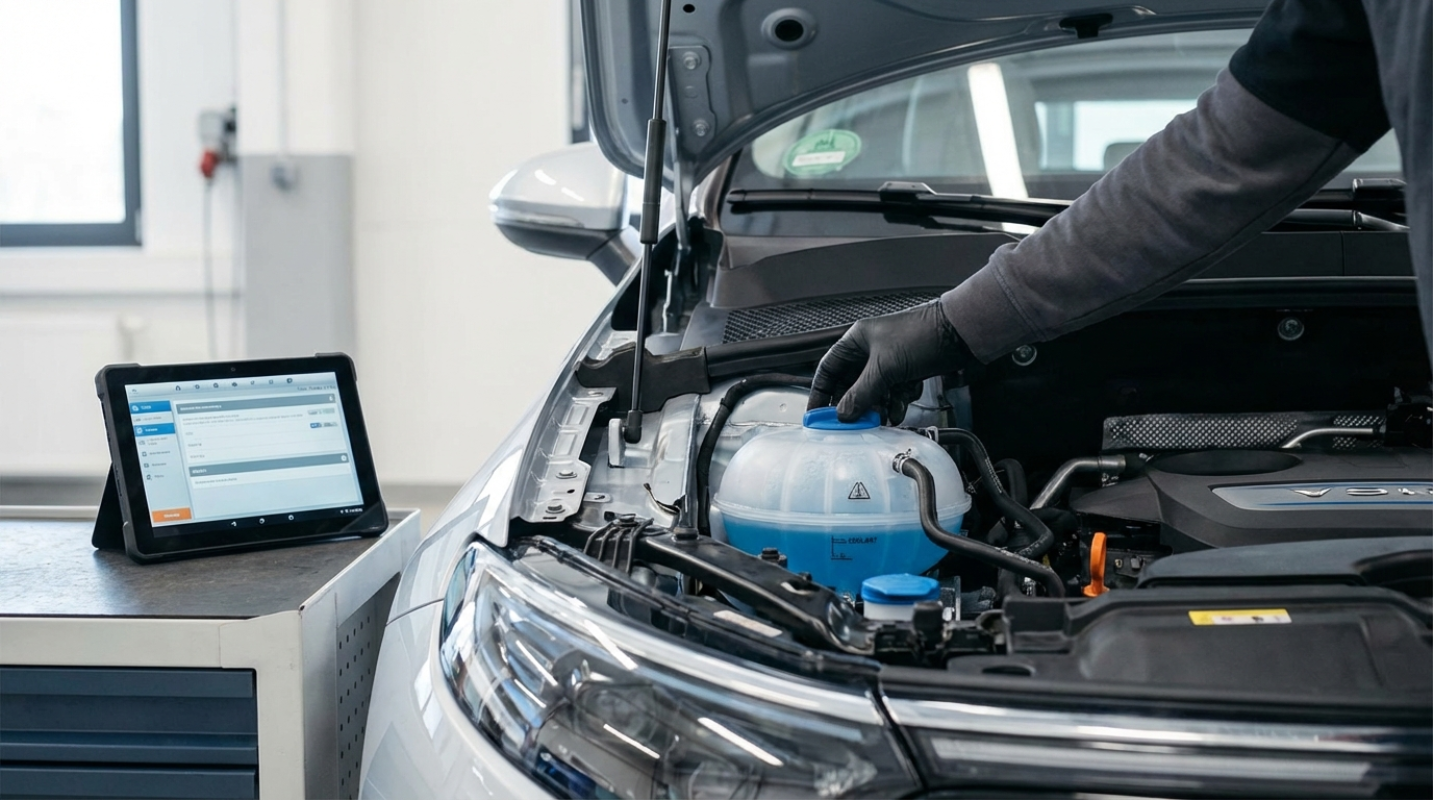
Start by finding your coolant reservoirs. Most EVs have one or two. You're looking for the fluid level to be between the "min" and "max" lines. If you see the level dropping, don't just pour in any old antifreeze. EV coolants are highly specific to the manufacturer. If it's low, it usually means there's a slow leak in a hose or a connection, and that is a job for a professional.
Although you're under there, check the hoses for any signs of cracking or salt buildup. Since many EVs sit low to the ground, the radiator and condenser units can become magnets for leaves, plastic bags, and road debris. If the airflow is blocked, your cooling fans will have to work twice as hard, which sucks energy away from your driving range.
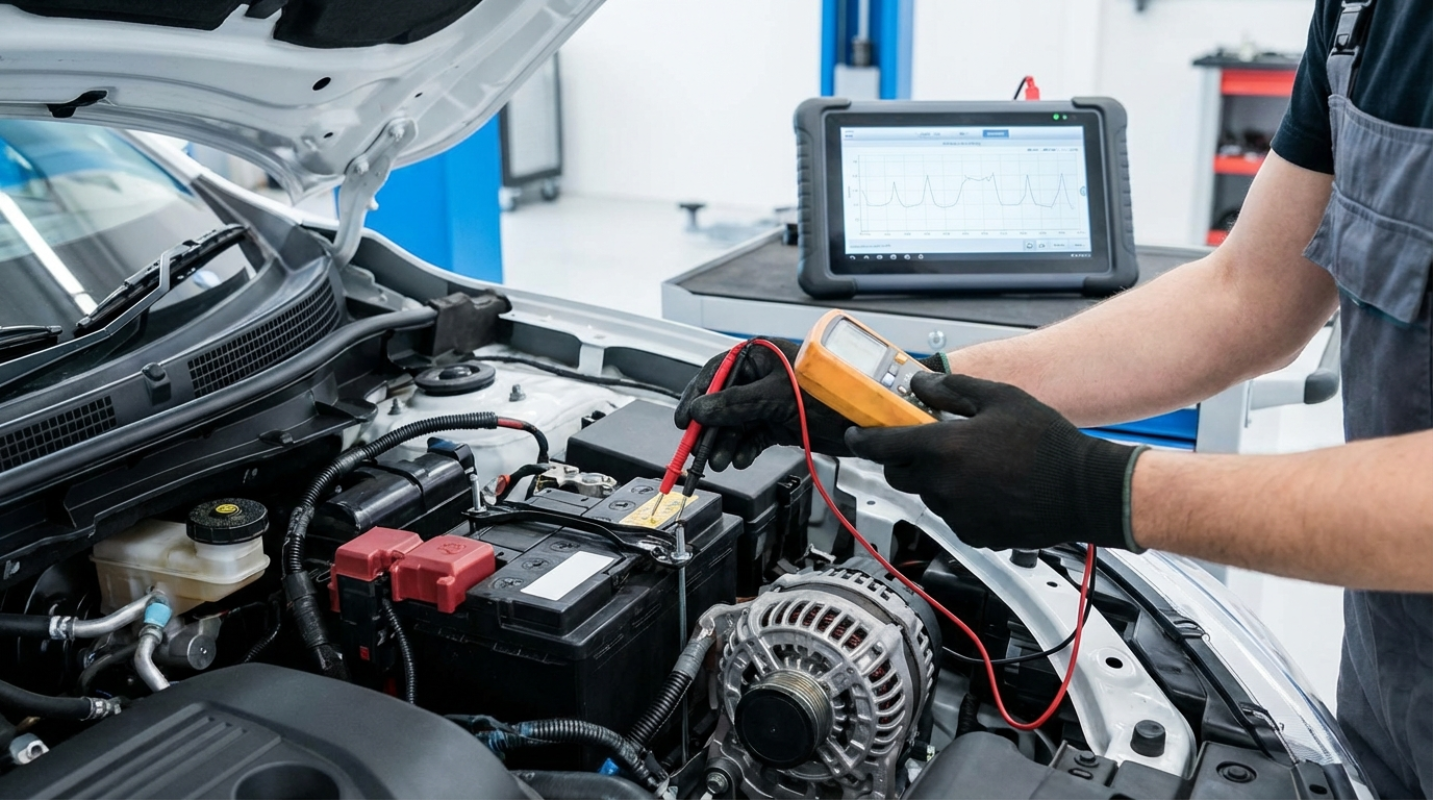
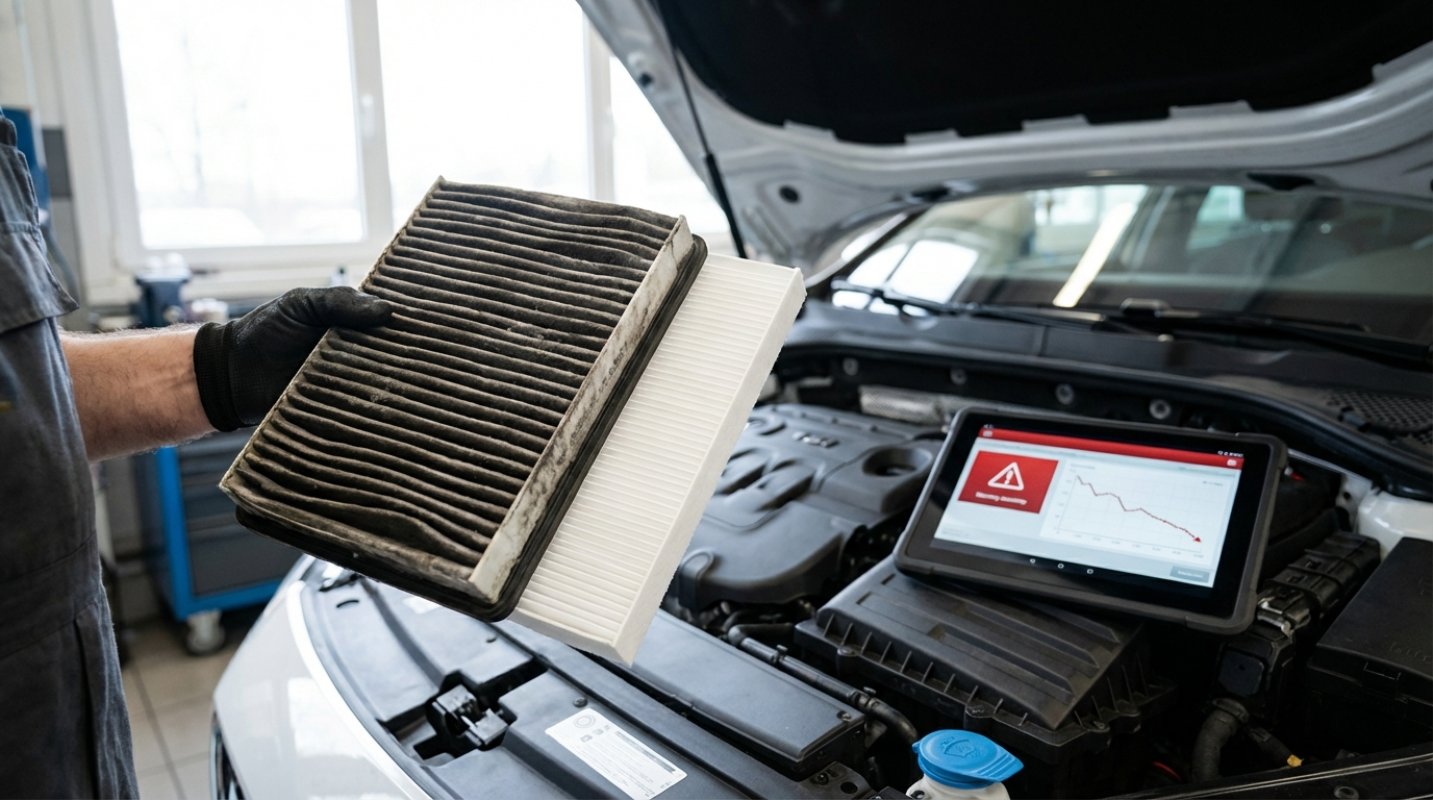
Your vehicle's software is actually your best maintenance tool. In 2026, most Battery Management Systems (BMS) are incredibly sensitive. If the system detects a pump is drawing too much current or a valve is sticking, you'll get a warning on your dashboard. Don't ignore these. A "Power Limited" error is often the car's way of saying it can't keep itself cool enough to drive at full speed.
Scheduled Service and the Complexity of Coolant Flushes
This is where things get a bit more serious. Every manufacturer has a different idea of when you should flush your coolant. Some, like Tesla, have moved toward a "Life of Vehicle" philosophy for their newer models, though they still recommend testing the fluid's health periodically.³ Others, like Hyundai, might suggest a change as early as 35,000 miles for specific low-conductivity fluids.¹
Why can't you just drain and refill it in your driveway? Because EVs are prone to air pockets. An air lock in a battery cooling loop can create a "hot spot" where one section of the battery gets dangerously hot while the rest stays cool. This can lead to cell failure.
Professional shops use a vacuum filling tool. They literally suck all the air out of the system to create a vacuum before letting the new coolant rush in. They also have to enter a "Service Mode" to manually open the internal valves (like the famous Tesla Octovalve) to make sure the fluid reaches every corner of the pack.²
Managing Extreme Conditions and Fast Charging Stress
If you're a fan of the road trip, you're putting your cooling system through its paces. DC Fast Charging generates an immense amount of heat. When you're pumping 800 volts into a battery pack, the cooling pumps have to run at maximum speed to keep the internal chemistry from cooking.
To minimize this stress, try to keep your state of charge between 20% and 80%. If you're constantly fast-charging to 100% in the middle of summer, you're forcing the thermal management system to work overtime. Over years, this can lead to seal degradation in the pumps or even "compressor scroll cracking" in the heat pump assembly.
Cold weather brings its own challenges. In 2026, most EVs use heat pumps to scavenge waste heat from the motors to warm the battery. If your cooling system isn't healthy, your car won't be able to "pre-condition" the battery efficiently. This results in slower charging speeds and a significant drop in winter range. Neglecting the system doesn't just risk a breakdown, it actively makes your car less useful on a daily basis.
Protecting Your Investment for the Long Haul
At the end of the day, taking care of your EV cooling system is about protecting the most expensive part of your car (the battery). Although EVs have a much lower fire risk than gas cars (roughly 25 fires per 100,000 vehicles compared to over 1,500 for ICE cars), a cooling failure is still the quickest way to end up with a five-figure repair bill.⁵
As the technology matures, we're seeing more independent EV specialists who can handle these services for less than a dealership. Just make sure they have the right diagnostic software to actuate your vehicle's thermal valves.
Proper cooling care is the secret to getting the most from your battery warranty and keeping your resale value high. If you can show a future buyer that you've maintained the thermal system and kept the coolant fresh, you're proving that the "heart" of the car is still in peak condition. Keep it cool, keep it clean, and your EV will likely outlast any gas car you've ever owned.
Sources:
2. EV Cooling System Maintenance Tips
3. Tesla Service Manual Thermal Management
4. EV Cooling System Market Analysis
This article on aidriv.com is for informational and educational purposes only. Readers are encouraged to consult qualified professionals and verify details with official sources before making decisions. This content does not constitute professional advice.