 (Image source: Gemini / Landon Phillips)
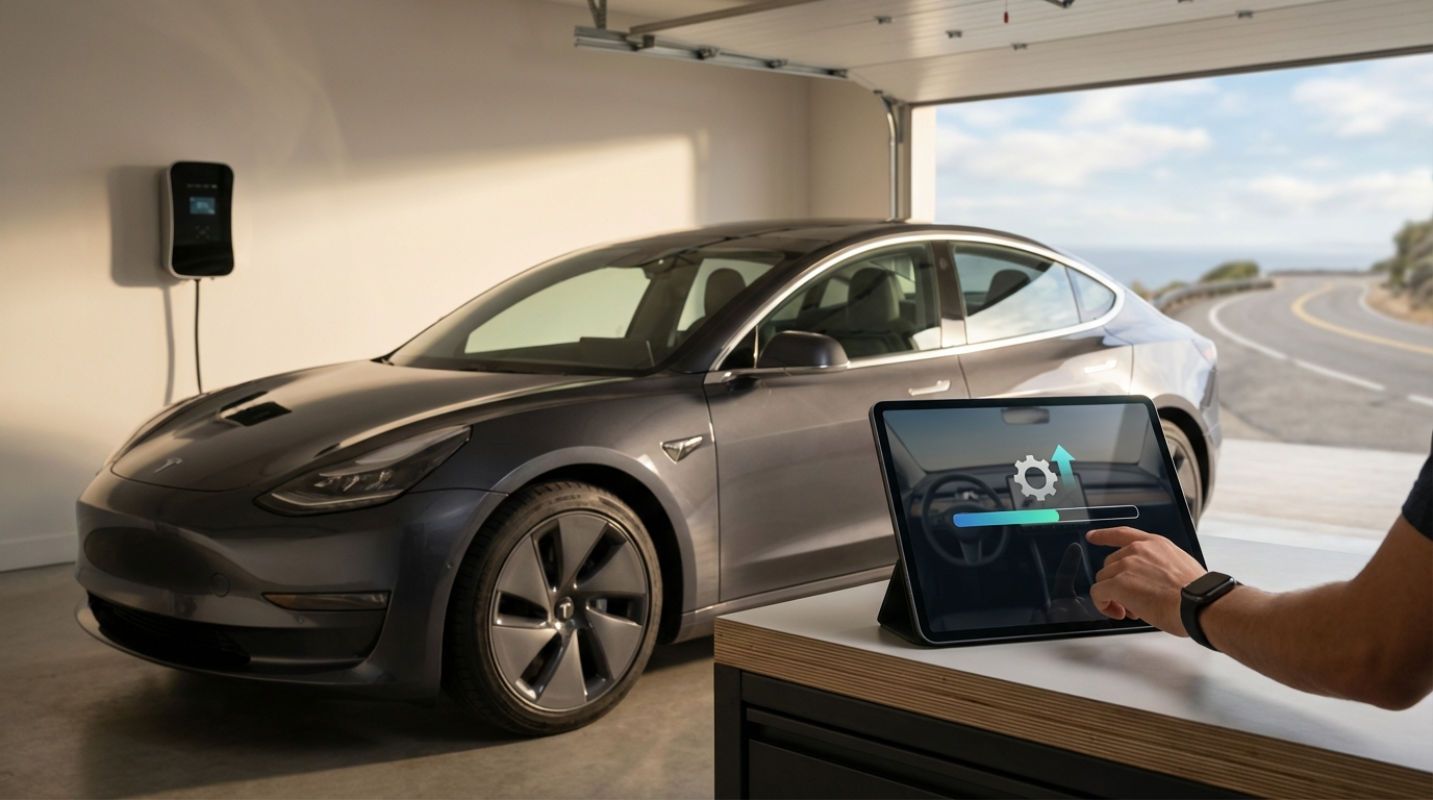
 Remember the last time you bought a smartphone? You probably expected it to get faster, gain new features, and maybe even improve its battery life over the next few years thanks to regular updates. Now, apply that same logic to the two ton machine sitting in your driveway. In 2026, the car you buy is no longer a static piece of hardware. It's a living, breathing "Software-Defined Vehicle" that evolves every time it connects to your home Wi-Fi.
This shift toward Over-the-Air (OTA) updates is completely changing the ownership experience. We've moved past the days when a "car update" meant driving to a dealership and sitting in a plastic chair for three hours while a technician plugged in a scanner. Today, your electric vehicle (EV) can wake up with more horsepower, better range, or a smarter autopilot system without you ever lifting a finger. But as we've seen over the last year, this digital leash comes with its own set of complications. So what does this actually mean for your daily drive and your wallet?
Performance Upgrades Unlocking Hidden Potential Through Code
Think of an OTA update as the digital equivalent of a free engine tune-up. Because EVs use software to manage exactly how much power the battery sends to the motors, manufacturers can "unlock" performance that was already there, just waiting for the right line of code. It's like buying a video game and then downloading a patch that makes your character run faster.
Take the Rivian 2025.06 update as a prime example. If you own a second-gen R1S or R1T, a simple download can now boost your horsepower from 533 to a massive 665 hp. Your torque jumps from 610 to 829 lb-ft, which drops your 0–60 mph time from 4.5 seconds to just 3.4 seconds. Ford did something similar with the Mustang Mach-E GT, adding 100 lb-ft of torque through software, making it faster than a Tesla Model Y Performance.
It's not just about raw speed, though. Recent 2025 updates from Tesla have focused heavily on thermal management. By using software to "pre-chill" the battery pack before you even arrive at a track or a steep mountain pass, the car can maintain peak power for much longer. It prevents the dreaded "limp mode" that used to plague early EVs during aggressive driving. Your car is learning how to stay cool under pressure.
The Range Revolution Software's Important Role in Battery Management
Range anxiety is still the biggest hurdle for new EV buyers, but software is proving to be a better fix than just stuffing more batteries into the floor. Your Battery Management System (BMS) is the brain of the operation, and it's constantly getting smarter. By refining how the car handles energy, manufacturers are finding "free" miles in cars that are already on the road.
BMW made waves with a 2025 update for the i4 that targeted the silicon carbide inverters. By optimizing how these components convert DC power from the battery to AC power for the motor, they cut energy consumption by 4.5 percent. That gave owners an extra 13 miles of range without changing a single bolt. Ford managed a similar feat with the 2024 and 2025 Mach-E, where powertrain tweaks added up to 20 miles of range compared to earlier versions of the same hardware.
Then there's the "vampire drain" problem. If you leave your car parked, systems like Tesla's Sentry Mode can eat through your battery. A recent update (2024.38.4) slashed that power draw by an estimated 40 percent. For you, that means coming back to your car after a long weekend and seeing 95 percent battery instead of 88 percent. It's these small, invisible wins that make the EV lifestyle feel less like a compromise.
Reliability and Safety Fixing Bugs and Enhancing Features
If you look at the J.D. Power 2025 Vehicle Dependability Study, you'll see something surprising. EVs are improving faster than any other vehicle type, reducing reported problems by 33 per 100 vehicles in just one year. A huge part of that is the ability to fix recalls and glitches remotely. If a car has a bug that causes the infotainment to freeze or the charging port to reject certain plugs, the manufacturer can push a fix to the entire fleet in hours.
Safety systems like BlueCruise or Tesla's Autopilot are also in a constant state of refinement. These aren't static features; they're learning systems. Software updates allow manufacturers to tweak how the car reacts to a truck merging into your lane or how it handles heavy rain. In 2026, your car is arguably safer than it was when you drove it off the lot because it has "seen" more data and received the logic to handle it.
Don't overlook the security aspect either. As cars become more connected, they become targets. Regular software patches are your car's first line of defense against digital threats. Keeping your vehicle updated is now just as important as changing the oil used to be for gas cars.
Top Recommendations
The Risks and Realities When Updates Go Wrong
It isn't all horsepower gains and better range. There's a darker side to the "computer on wheels" philosophy. When you rely on code for everything, a single bad update can turn your $70,000 SUV into a very expensive paperweight. We call this "bricking," and while it's rare, it's a nightmare when it happens.
Volvo learned this the hard way with the EX30. A software error in 2024 led to a total recall because the infotainment screens were going black and the cars were engaging emergency braking for no reason. It's a reminder that moving fast and breaking things is fine for a social media app, but it's dangerous for a three ton vehicle.
There's also the issue of battery health. A 2025 study by Geotab found that average annual battery degradation hit 2.3 percent, up slightly from previous years.² Some experts think this is because software is allowing for faster and more frequent DC charging, which is great for road trips but harder on the battery cells. Some updates now actually limit your charging speed or capacity to protect the battery's long term health. You might find your car charges slower after an update, which can be frustrating if you weren't expecting it.
The Future of Ownership is Iterative
The most significant impact of these updates might actually be on your car's resale value. In 2025 and 2026, data showed that EVs from brands that provide frequent, meaningful OTA updates (like Tesla and Rivian) retained 10 to 15 percent more value after three years than "static" EVs. Buyers today don't want a car that feels like a relic of the year it was built. They want a car that stays current.
Looking ahead, we're moving toward even deeper integration. We're already seeing the rise of "Digital Twins," where your car's software creates a virtual model of your battery to predict cell failure weeks before it actually happens. This kind of predictive maintenance will likely become the standard, potentially ending the era of the "check engine" light forever.
The takeaway for you is simple: embrace the change, but stay informed. Don't be afraid to hit the "update" button, but maybe don't do it at 11:00 PM the night before a 500 mile road trip. Your EV is a dynamic, changing machine. It's the first time in history that the car you drive today is actually worse than the car you'll be driving next year.
Sources:
1. Data shows EV battery health remains strong as fast charging use increases